
How Waterproof Plywood Prevents Swelling and Delamination
September 25, 2026
Table of Contents
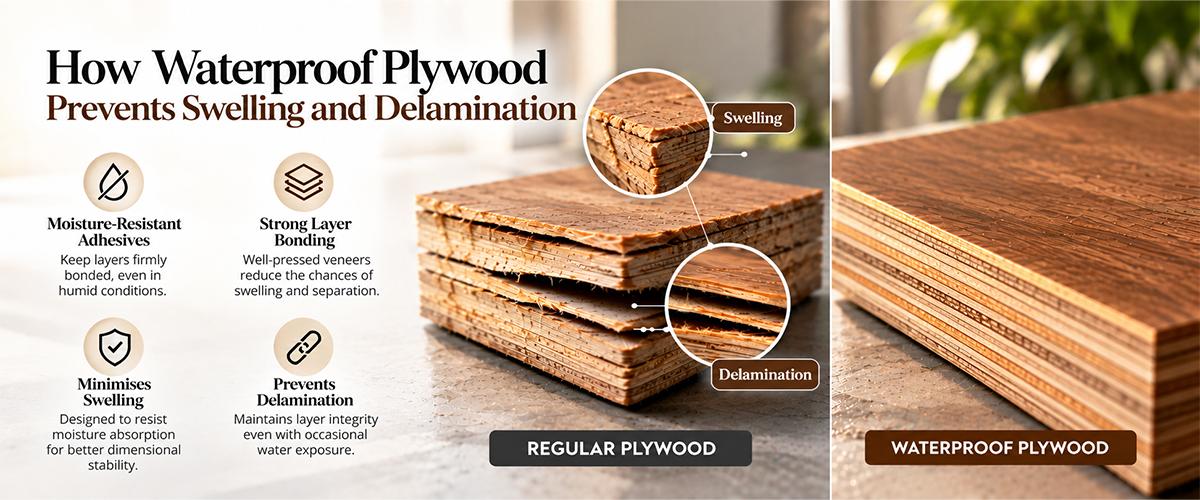
Waterproof plywood swelling is minimized because waterproof plywood utilizes adhesives that resist moisture, good bonding of layers and appropriate core construction. All these aspects prevent moisture infiltration between layers, which reduces the likelihood of dimensional shifts or delamination.
However, waterproof plywood does not prevent water-related damage completely. Long exposure, damaged edges, bad installation, or standing water may still lead to some issues. It is important to understand how plywood behaves under moisture, which can shed light on the efficiency of particular grades in difficult conditions.
Why Water Causes Plywood to Swell
Wood is hygroscopic by nature which means that it can both absorb and lose moisture depending on its surroundings. This is the essence of plywood swelling with water, which is the result of the factors defining the swelling, such as wood species, moisture level, plywood construction, thickness and the duration of the moisture exposure.
Water can infiltrate through damaged surfaces, exposed edges and screw holes or through poorly sealed joints. When moisture reaches the inner veneers, the ply might suffer from significant effects, as repeated wetting and drying can start affecting the stability of the panel.
How Waterproof Plywood Reduces Swelling
Waterproof plywood is supposed to provide better resistance against moisture as compared to plywood meant for dry interiors. The way it is designed involves the use of appropriate veneers and adhesive systems meant to prevent delamination. If the veneer is well bonded, then the individual layers are less likely to become separated from each other. This is beneficial when it comes to preventing dimensional changes due to moisture acting on plywood.
In turn, it means that the amount of swelling of waterproof plywood is less if the panel has been properly manufactured and installed.
How Waterproof Plywood Prevents Delamination
Delamination can occur and is described as the loss of the bond between the separate veneer layers. Water usually plays a role in this process because moisture is responsible for weakening the bonding properties of the adhesive or making the wood expand and contract.
The waterproof plywood makes use of a particular bonding system that is supposed to allow the retention of a bond even when exposed to moisture. The good fixation of the layers prevents any damage to the panel in humid conditions.
This is especially important when plywood may be subject to occasional splashing or moisture exposure.
Does Waterproof Plywood Swell?
Does waterproof plywood swell? Yes, waterproof plywood sometimes still has to undergo some degree of dimensional changes even if it is affected by moisture because it is made from natural wood.
However, it is different from regular plywood because it is created with the aim of preventing moisture penetration and keeping layers intact.
Thus, it is able to perform much better in conditions of moisture exposure than the plywood that was designed to be used only in dry conditions.
The degree of swelling of waterproof plywood depends on its structure, the length of its exposure to moisture and the way it was installed and looked after.
Plywood Swelling Due to Water and Delamination
Plywood expansion as a result of water can lead to swelling as well as delamination, but the two are quite different. Swelling is basically defined as an increase in volume and size of the plywood, while delamination refers to separating the laminated layers that were glued together.
It should be noted that a plywood sheet might swell due to high humidity but not delaminate at the same time. However, after a certain period of time, a plywood assembly that has been exposed to moisture undergoes delamination.
This is why picking the right plywood grade for your particular application is much more important than just trusting the word “waterproof” in its description.
Where Waterproof Plywood Helps Most
Water resistance would be very helpful in the areas where plywood could be exposed to moisture. Examples include:
- Kitchen cabinets
- Bathroom furniture
- Humid places
- Interiors with high moisture content
- Prime example of exterior application in case you choose the right product in regards to exterior usage
Right plywood grades, configurations, and comfort of use largely impacts the effectiveness of waterproof plywood.
The reasons that are found commonly are:
- Unprotected edges or edges that are open
- Water that has accumulated at the adhesive joints
- Surfaces that have been cut and ruined
- Constantly getting water that remains stagnant
- Wrong quality plywood is used
- Bad or weak bonding of the surfaces used
- Poor ventilation in areas that have a high humidity level
Managing these factors helps to reduce waterproof plywood swelling while maximising the usage of the plywood.
How to Minimise Waterproof Plywood Swelling
You should always pay attention to the right plywood usage policy. Edges and cuts need to be covered when needed, while joints must be made in a way that prevents accumulation of water.
The plywood should be installed in the correct environment. It is also important to stay away from standing water even if one has waterproof plywood.
Constantly checking the points where moisture could accumulate will help to protect the plywood from damage.
Conclusion
Waterproof plywood swelling can be prevented due to the right veneer technology, strong bonding and moisture-resistant adhesive use. This way, the veneer wood layers would not be separated.
One cannot say, though, that the wood will remain unaffected by moisture. Keeping in mind that any wood would react to moisture exposure, it is essential to get the right grade of plywood, protect the vulnerable areas and avoid situations where the plywood can come into contact with water too much.
Frequently Asked Questions
Does Waterproof Plywood Swell?
Waterproof plywood may swell a little. However, the right grade will prevent the wood section from swelling too much.
Can Water Cause Plywood to Delaminate?
Yes, it is possible. Due to long-standing water exposure, repeated wetting and drying of the surfaces and poor bonding, the wood layers may un bond. However, waterproof plywood is designed in a way that will lower the chances of delamination.
What Causes Plywood Swelling Due to Water?
Water absorption causes wood fibers to expand. The plywood swelling depends on the wood used, the quality of construction, the time exposed to water, and the plywood grade.
Is Waterproof Plywood Completely Resistant to Water?
No, it is not. Waterproof plywood is made in a way to withstand water. However, it does not mean that it will not suffer from damage due to moisture that affects wood.
How Can Waterproof Plywood Swelling Be Prevented?
It is important to choose the right wood grade based on the humidity level, protect cut edges, and prevent water accumulation in one place.