
Which is the Best Plywood for Ceilings?
February 28, 2025
Table of Contents
Imagine stepping into a room where everything looks elegant but the ceiling looks dull or damaged, making the entire space feel uninviting? Well, a ceiling design significantly impacts the overall ambiance of a space. Among the different materials available, Royale Touche plywood for ceilings stands out due to its versatility, durability, and aesthetic appeal. From creating intricate architectural designs to being cost effective, plywood offers numerous possibilities for ceilings.
Choosing the Right Plywood for Ceiling
Selecting the best plywood for ceiling like from Royale Touche requires knowledge of the requirements like area, humidity, budget and design.
Marine Plywood
Marine plywood is developed to withstand a high-humidity environment and is suitable for indoor, outdoor and coastal uses. Its resistance to water damage ensures life expectancy even in extreme conditions.
Hardwood Plywood
Hardwood plywood for ceiling provides great strength and elegant finishing and is ideal for designing ceilings. It works to create intricate patterns with premium finishes.
Fire-Retardant Plywood
Fire retardant plywood provides safety by decreasing fire risk and is a safe choice for use in both commercial and residential properties.
Why Choose Plywood for Ceilings?
Plywood has become the most sought-after ceiling material given how it combines functionality with style.
Durability and Strength
Plywood is strong enough to support weight over a period of time, making it an ideal material for ceilings. It resists warping and cracking, thus providing a long life even in places with constant temperature fluctuation.
Easy Installation
Lightweight compared to many ceiling materials, ply ceiling is easy to handle and install.
Cost-Effective
Compared to alternatives like gypsum or metal, plywood is much cheaper and maintains quality. As there are a variety of plywood options to suit budgets, plywood can be the best choice for projects in any budget range.
Aesthetic Versatility
Plywood can be finished, stained, or painted to suit interior design tastes. It is easy to get a rustic, vintage look or modern sophisticated one.
Also Read - Types of Plywood Finishes
Popular Ceiling Design Ideas
Exposed Plywood Beams
Exposing plywood beams can really highlight the natural beauty of a ply ceiling. This design is great for warm and cozy living spaces.
Acoustic Ceiling Panels
Combine functionality with style using acoustic-grade plywood panels. Ideal for enhancing sound quality in spaces like home theaters or offices.
Waffle and Coffered Ceilings
Provide depth and textures with a grid-like design that is quite effective for large rooms. Combine this with LED lighting for extra glamour and luxury.
Chevron and Herringbone Patterns
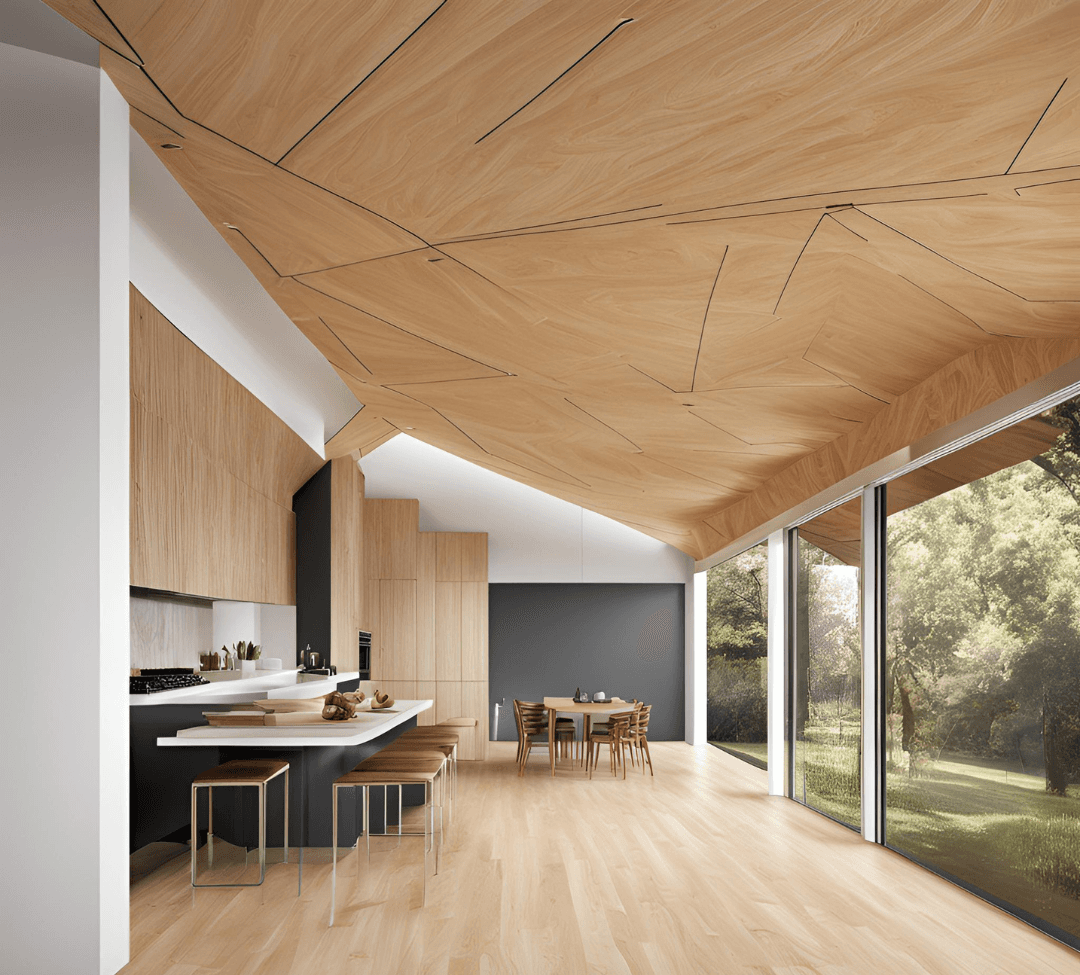
Install plywood for the ceiling in angled patterns to create dramatic visual interest and give the living rooms and bedrooms a stylish look.
Plank and White-Washed Styles
Lay plywood planks parallel to give a more traditional, linear look, or apply a whitewash to make things brighter, airier. Both styles are perfect for minimalistic or Scandinavian-inspired interiors.
Geometric Patterns
Cut plywood in various shapes, such as triangles and hexagons, for bold and modern ceiling design. This method gives an artistic touch to any room.
Also Read - Top 10 Plywood Desk Designs
Benefits of Plywood Ceilings
There are various advantages that make it convenient and stylish for house owners when choosing plywood for their ceilings:
Personalization Options
It can be stained, painted, or polished for personal tastes.
Low Maintenance
Ply ceiling requires minimal maintenance. With regular dusting and occasional polishing, one can keep them looking new.
Insulation Properties
Plywood provides natural insulation, helping to regulate indoor temperatures effectively.
Versatility Across Spaces
Plywood is versatile and can be used for a variety of applications, from residential homes to commercial spaces.
Tips for Installing Plywood Ceilings
To achieve a flawless look, follow these tips during installation:
Select the Right Thickness
For the ply ceiling, the thickness of the plywood must be between 6mm-12mm for durability and ease of installation.
Proper Surface Preparation
The ceiling framework has to be robust to hold plywood panels.
Durability Seal
Make sure to apply a protective seal to prevent moisture uptake and extend life.
Consult the Professionals
Although ply ceiling can be done as a DIY project, it is better to hire professionals to get the precise finish.
Plywood for ceilings is all about blending affordability, durability, and versatility. So, whether one is looking for rustic exposed beams or a geometric pattern in a modern sense, plywood adapts to every design preference. By choosing the best plywood for the ceiling, one can create breathtaking and long-lasting spaces which blend aesthetics with functionality. A ply ceiling is cost-effective and easy to install, making it a very reliable and visually appealing solution for any home or office.
Plywood Ceilings Cost - Cost per Sq Ft for Plywood Ceiling
Plywood ceilings can be expensive, but many factors will determine your total cost. Your plywood type, thickness, design complexity, finishing options, and local labour costs will all contribute to the final price.
Many people use plywood ceilings because of their natural appearance, strength, and multiple design choices. In India, a basic plywood ceiling installation typically includes simple panel designs at an entry-level rate per square foot. However, incorporating decorative designs, premium-grade plywood, and other decorative options will increase project costs.
A complete budget for your plywood ceiling will include all costs associated with framing and fastening, sealing and finishing surfaces, and all final installation expenses. The final project cost will vary based on the room's dimensions, ceiling height, and ease of access to the ceiling. The quality of work performed by an individual will also affect the final project cost.
While using premium-grade or high-quality plywood may have a higher up-front cost, this additional expense is often justified by extended service life and lower maintenance requirements.
Plywood Ceilings Installation Tips and Guidelines
Choosing the right thickness of plywood before installation will enhance the strength, appearance, and long-term practicality of your ceiling.
Selecting the Correct Thickness of Plywood
The thickness of plywood selected for ceiling installation should be based on both the length of the span and the load requirements for each project.
Preparing a Strong Framework
To achieve the best ceiling installations, it is important to prepare a framework that will be level, strong and well-secured.
Allowing Movement Tolerance
During the installation, small gaps between the ceiling panels allow for temperature and humidity fluctuations that will occur during the winter months.
Applying Proper Surface Protection
The surface of your plywood panels should be sealed with a moisture-resistant product to prevent the accumulation of dust and moisture.
Using Quality Fasteners
Panels should be fastened equally for the prevention of vibration and "looseness" over time.
Maintaining Proper Alignment
To achieve a uniform finish, check the levels regularly to maintain proper alignment and to ensure the panels are all installed correctly.
Using Professional installations
Large or ornate ceilings will benefit from precision installation by trained professionals.
Conclusion
Plywood for ceilings is durable, flexible in design, and also provides natural aesthetics due to its warmth. If you select the right plywood, proper installation and design selection, and minimal maintenance, it will last for years and provide greater aesthetic value. Investing in different grades and quality will incur different costs, but will give a lifetime of value and aesthetic appeal. You can select from the wide range of plywood from Royale Touche for long-lasting durability and aesthetics.
Frequently Asked Questions
Is plywood a good choice for ceilings?
Plywood is excellent for ceilings as it's durable, versatile, and inexpensive. Plywood offers flexibility in designing ceilings, insulation, and blends with any kind of interior décor.
Which type of plywood is ideal for ceiling installation?
BWP-grade or marine ply ceiling is the best in indoor areas and in areas of high humidity compared to MR plywood. Ensure that it is hardwood plywood which can be used for aesthetic purposes while ensuring durability.
Can plywood ceilings handle moisture or humidity?
Certain types of plywood, like marine plywood, are designed to handle moisture effectively. MR-grade plywood works well in indoor spaces with zero moisture, while marine plywood is ideal for areas with high-humidity like coastal regions, bathrooms, or kitchens.
Is a plywood ceiling better than a gypsum/cement ceiling?
Plywood provides a rich, warm, natural appearance and also has excellent structural strength with design flexibility as well. Gypsum and cement types of boards are lighter in weight and generally provide better inherent fire resistance than plywood. The decision on which to use will depend on the overall design goals of the project, safety needs/requirements and budget.
What is the cost of installing plywood ceilings (India)?
A range of costs exists for installing plywood ceilings due to the numerous varieties and grades of plywood available, as well as varying thicknesses, design complexity and labour rates. The most economical option is usually a simple installation, while a customised design and premium finish will add to the overall cost of the installation.
How do I care for/clean a plywood ceiling?
- Dust the ceiling regularly, with a soft cloth or duster.
- Clean spots with a slightly moist cloth.
- Do not use harsh cleaners or excessive amounts of water.
- You should also reapply protective coating as needed.
How long will plywood ceilings last?
Plywood ceilings, when properly installed and routinely maintained, will provide years of stability and aesthetic appeal. The lifespan of a plywood ceiling will be based on the quality of the material used and the conditions in which it has been installed.
Why Fire Safety and Code Compliance for Plywood Ceilings?
Plywood is a combustible material, and therefore, it may require fire-retardant treatment in order to meet local building codes. In order to comply with these codes, the use of treated plywood, protective coatings, and other safety measures may be necessary.