Which Plywood is best for a wardrobe or a cupboard in 2026
November 27, 2024
Table of Contents
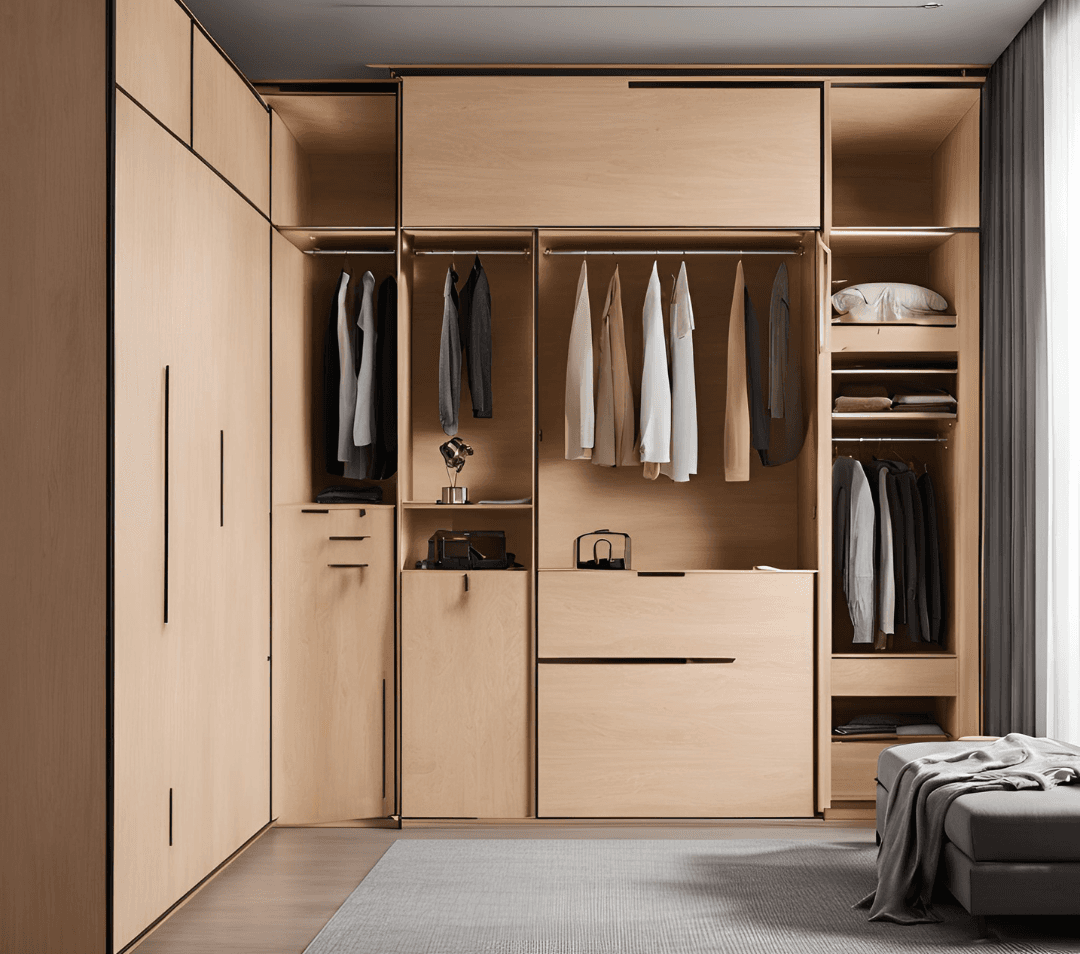
When designing a wardrobe or cupboards, one wants just the right material for it to be strong, aesthetically pleasing, and functional. The use of high quality plywood sheets for furniture and interiors may be apt, given the strength, versatility, and multiple applications they can be used in. With a variety of options in plywood, one needs to know about different types of plywood to choose the best plywood for wardrobes and cupboards in one's home.
For wardrobes, the best plywood is generally recognised to be marine plywood because of its durability, moisture-resistance properties, and long-term structural stability. Another good type of plywood to use if you have a higher humidity environment is BWR plywood, while MR Plywood will likely work very well in standard bedroom wardrobes since these ones won't be exposed to much moisture. The final selection will depend upon how humid it is (in your specific climate), your durability needs, and how much you want to spend on the product.
Which MM Plywood Is Ideal for Wardrobes?
The majority of wardrobes are typically built out of 19 mm plywood for the frame, as this allows for a strong structural weight and a strong, sturdy piece. If you are wondering which mm plywood is needed for a wardrobe, different plywood thicknesses are used depending on the application and load-bearing requirement. The back of your wardrobe will generally be built out of 6 mm ply, and your internal shelves will commonly be built out of 12 mm plywood or 16 mm plywood.
How Much Plywood Is Needed for a Wardrobe?
To estimate how much plywood you will need to build a wardrobe, keep in mind that each piece of plywood varies depending on the overall style of the wardrobe. Most custom or non-standard wardrobes will use multiple thicknesses of plywood in order to build and support the wardrobe's various structural features (shelves/doors, etc.).
Plywood Types That Are Excellent for Wardrobes
When selecting plywood for wardrobes, it's essential to first understand each type of plywood, its strength, durability and resilience in a given climatic conditions along with budget consideration. to ensure creating long lasting, sturdy wardrobes.
While plywood is a popular choice for wardrobes, blockboard for wardrobes can also be considered depending on the desired strength, stability, and design requirements.
MR (Moisture-Resistant) Plywood
MR ply is moisture resistant but it is not waterproof and works where humidity is low and water exposure is less. This is a commonly chosen plywood for wardrobe and cupboards in bedroom or living room walls if budget is a constraint.
BWR Plywood
This stands for Boiling Water-Resistant that is best suited for use in locations where moisture is present but not constantly present like in the kitchens or bathrooms. BWR plywood can tolerate water splashing but is not waterproof, making it a less suitable material for cabinetry near water sources or for humid areas.
Marine Plywood
The marine-grade from Royale Touche is the toughest and most resistant to water. When talking about wardrobes, marine plywood can be a wonderful option especially if one is living by the beach or there is a high humidity level in the region. It is also the touted plywood, making it ideal for wardrobes.
Why Plywood is the Best Material for Wardrobes
Plywood is the best material option available when choosing to construct a wardrobe. Plywood combines dimensional stability and structural strength with the flexibility to provide multiple aesthetic options. Plywood is built using cross-lamination of the grain of the wood (the veneer) as opposed to simply using one solid piece of wood. Therefore, plywood cannot warp or crack like solid wood can. Larger wardrobe shutters, shelves or panels that are load-bearing will always be constructed using plywood rather than any other type of material.
Plywood has a great deal of moisture resistance, making it the best option when selecting a wardrobe building material in India, where there is a constant fluctuation in humidity. In addition, using plywood will ensure that your wardrobe will not swell or develop fungus compared to both particleboard and low-density materials. This is one of the primary reasons that both homeowners and interior design professionals choose plywood every time they design furniture that will be installed for the long term.
If you are looking to design a wardrobe using plywood, you will find that the plywood will easily accept a variety of different finishes, such as laminate, varnish, textured finishes (PU, and all these finishes will adhere well to the plywood with the same level of consistency across the entire surface area. Therefore, if you want to choose the best plywood to use for a wardrobe, your choice of material should be based on performance as well as the aesthetics of the final product; however, plywood delivers both of these.
Besides finishing well, plywood also allows for very precise machining (cutting) and has a high screw-holding capacity, allowing for a stable hardware installation. Therefore, when shopping for a wardrobe, you can expect that the doors will work properly when they are closed and the alignment between the drawers and panels will remain in alignment throughout the lifetime of your robe/walk-in closet.
Factors to Consider When Choosing a Plywood
Thickness and Durability
The thickness and size of the plywood determines the durability of the wardrobes and cupboards. For a wardrobe, 19mm plywood is standard thickness as it is strong and durable in structure. It is stable to hold shelves, hang rods and contents without bending or warping over time. Plywood of 12mm to 16mm is used for cupboard doors and panels. This thickness makes the plywood strong, durable while making it easy to work with.
Plywood Finish and Surface Quality
When it comes to wardrobe and cupboards, one needs to focus on the look and finish of the plywood. A plywood must be strong and durable, but not compromise on the appearance and finish. One would want a smooth surface that could be painted, laminated, or veneered in such a way as to match the aesthetics within your home.
Calibrated Plywood
Calibrated plywood is a plywood where thickness is uniform everywhere. It provides smoothness that is required for wardrobe doors and panels, where a polished surface is essential to achieve a clean look.
Veneered Plywood
The veneered plywood is covered with a thin layer of natural wood veneer on the surface giving a look of real solid wood. This is an option for anyone who desires a wardrobe with a premium, wooden finish. For better plywood for the wardrobe, both the structural quality of plywood as well as surface finish are to be considered in order to create a balance between durability and aesthetics.
Price Consideration
Price is an important factor in any home improvement project, and there is a significant variance when considering the pricing of different types of plywood for wardrobe.
MR Plywood is the cheapest version and should be avoided for most interior purposes. If cost is a constraint, MR Plywood can be used in the wardrobe or cupboard.
BWR plywood is more costlier than MR plywood but does not offer water-resistance like Marine Plywood. In the case of a lot of wardrobes or cupboards located in a kitchen or bathroom, which is one place filled with a lot of moisture, MR Plywood may not give the desired protection against moisture.
Marine Plywood is slightly expensive plywood but offers unparalleled durability and water resistance. It can be used for the typical wardrobes and long-lasting water-proof solutions like this are best plywood for wardrobes in places with humidity.
Comparison Table – Best Plywood for Wardrobes
| Plywood Type | Moisture Resistance | Durability | Surface Finish | Ideal Wardrobe Application | Cost Level |
|---|---|---|---|---|---|
| MR Plywood (Moisture Resistant) | Low to Moderate | Good for indoor furniture | Smooth and easy to laminate | Bedroom wardrobes, cupboards in dry rooms | ₹70 – ₹120 |
| BWR Plywood (Boiling Water Resistant) | Moderate | Strong and stable | Good finish quality | Wardrobes in humid areas or near bathrooms | ₹120 – ₹180 |
| Marine Plywood (BWP / Marine Grade) | Very High | Extremely durable | Excellent for premium laminates and veneers | Wardrobes in coastal regions or high humidity areas | ₹180 – ₹260 |
| Calibrated Plywood | Moderate to High | Very stable due to uniform thickness | Very smooth surface | Wardrobe shutters and precision furniture panels | ₹160 – ₹230 |
| Veneered Plywood | Depends on base plywood | Good | Premium natural wood finish | Designer wardrobes and luxury interiors | ₹220 – ₹350 |
Selecting between Plywood vs MDF for Wardrobes
Plywood is stronger and moisture-resistant than MDF. Plywood is considerably preferred when the wardrobes and cupboards are expected to be long lasting. The layered structure in ply gives it better load-carrying capacity, so it becomes the best choice when there is clothing in the wardrobe that is bulky or many accessories.
MDF may be smoother but it lacks the strength and durability of plywood. It would bend over time easily, especially if heavy loads are applied. It would probably be fine for decorative panels or lightweight furniture, but is not recommended for structural components of wardrobes or cupboard building.
The best plywood for a cupboard or wardrobe from Royale Touche depends on the parameters like moisture resistance, strength, durability, etc., along with budget. For most of the indoor wardrobes, marine plywood is the best for superior water resistance and unparalleled strength. If one takes into consideration these factors, one can choose the best plywood that can help create a long-lasting durable wardrobe or cupboard.
Plywood vs Other Materials for Wardrobes
Plywood vs MDF
When subjected to intense loads, MDF shelving typically bends and is susceptible to chipping at the edges. Therefore, if you build a wardrobe to hold heavy garments, luggage, or accessories, there are no materials that will surpass plywood in performance.
Plywood vs Particle Board
Though particle boards are relatively inexpensive, they are very susceptible to moisture and do not hold screws well, particularly in humid conditions. Once exposed to humidity, particle boards will swell permanently. Therefore, particle boards should not be considered as durable materials for building a wardrobe.
Plywood vs Solid Wood
Although solid wood panels have an attractive look, they are typically more costly than plywood and exhibit seasonal expansion/contraction patterns. Plywood exhibits similar strength but will hold dimensional stability better and also provide consistent pricing.
The bottom line is that if structural qualities, finishing compatibility, and long-term value are your main priorities, plywood is still the best material to construct any cabinets or wardrobes for a residential environment.
How to Maintain a Plywood Wardrobe
The correct maintenance of a plywood wardrobe will improve its longevity and appearance. In fact, if you do not take care of your wardrobe properly, even the best grade of plywood will not perform as well as it could.
Regular Cleaning
Using a dry or slightly wet microfibre cloth, you can remove and clean dust from the surface of your wardrobe; do not use excessive amounts of water or caustic materials as these may affect the finish of the surface.
Control Humidity Levels
You must ensure that the interior of the room containing your wardrobe is adequately ventilated and limit your wardrobe to a humid area for only a brief period of time. To help reduce the levels of humidity inside the wardrobe, try using dehumidifiers or use silica gel bags; these will help control the internal level of humidity.
Hardware Inspection
Check and confirm that all hinges, drawer slides and handles are secure and in proper alignment with the face panels to reduce the potential for the face panels being misaligned from the hardware that has dislodged.
Surface Protection
Avoid inadvertently dragging sharp objects over the laminate or veneer surfaces, and use shelf liners to help protect from both abrasion and/or moisture.
Pest Control
Keep your wardrobe clean at all times, and do not store wet clothing in the wardrobe to minimise insect attraction or mould/fungal development.
By following these guidelines, you can maintain the strength, beauty, and functionality of your plywood wardrobe for many years.
Common Mistakes to Avoid When Selecting Plywood for a Wardrobe
Choosing the wrong type of plywood for your wardrobe may negatively affect its durability, safety, and appearance. The following are some of the most common mistakes to avoid:
Ignoring Humidity Levels
Choosing low-grade plywood for areas with high relative humidity may cause the plywood to swell and/or delaminate. Therefore, before selecting your plywood, you should assess the relative humidity of the room in which the wardrobe will be located.
Incorrect Thickness
Using plywood that is insufficiently thick to support shelves and/or frame members may lead to sagging shelves and/or a weakened structure. Any load-bearing component should be constructed with sufficient thickness to perform optimally regardless of the length of time the component is used.
Core Quality
The surface finish of the plywood does not represent the internal strength of the product. Always check the quality and evenness of the internal bonding.
Choosing Price Over Performance
Even though some lower-cost products can save you a large sum of money initially, they can result in much larger expenses in the form of long-term maintenance and replacement. You would want to invest in the highest quality plywood for your cabinets, as it would give you the best return on investment.
Finish Compatibility
Some finishes require smooth and level surfaces. If the surfaces are not compatible, it may result in an adverse impact on the aesthetics and performance of your furniture.
By avoiding these mistakes, you can assure the continued integrity, functionality, and visual beauty of your wardrobe for years to come.
Conclusion
The best plywood type for wardrobes will depend on the location of your wardrobe, how much moisture it will encounter, and how much you want to spend. For example, if you live in a humid area or near the coast, marine-grade plywood is your best choice due to its extreme moisture and durability properties. If you have a moderate amount of humidity in your home, you can use BWR or MR-grade plywood for your wardrobe.
By using the right type of plywood, you can build a wardrobe that is durable, structurally sound, and looks great and will provide you with a long time of use.
Frequently Asked Questions
1. What type of plywood is good for wardrobe interiors?
The most commonly used types of plywood for wardrobe interiors include MR and BWR. Both grades have adequate strength to withstand indoor use and are reasonably resistant to moisture.
2. What is the best plywood for wardrobes?
Marine plywood is an excellent choice for wardrobes, especially in areas with high humidity. Marine plywood provides the optimal amount of moisture resistance and is extremely durable.
3. What thickness of plywood should be used for wardrobe construction?
Wardrobe frames and shelves are generally constructed with 19mm thick plywood; on the other hand, doors and panels may be constructed with 12mm-16mm thick plywood.
4. How do you choose plywood for wardrobe doors?
Select a smooth-edged (or glyptic) plywood that has been calibrated to ensure that the overlying laminate, veneer, or paint can be applied uniformly (even surface).
5. What plywood strength can one use for wardrobes?
19mm plywood is ideal for the wardrobe frame since it will retain both good strength and durability. For cupboard doors and door panels, people tend to opt for 12mm to 16mm plywood that serves a balance between adequate strength and usability.
6. Can marine plywood be used for the wardrobes?
Marine plywood is the best plywood for wardrobes and especially in damp areas. However, it costs more than other plywoods and is highly recommended where moisture resistance is paramount.
7. Is plywood superior to MDF as a material that should be used in a wardrobe?
Since plywood is generally stronger and more resistant to moisture than MDF, it would be more appropriate for wardrobes or cabinets that can bear heavy loads and may have contact with moisture.

Related Blogs