
Teak Veneer vs Teak Plywood: Key Differences, Benefits & Which to Choose
July 21, 2026
Table of Contents
Teak veneer vs teak plywood: which should you choose? It’s all about your project. If you want the richness and natural look of teak wood, use teak veneer. But if you need strength, durability and stability for your furniture, teak plywood is the way to go. If you know the difference between teak veneer and teak plywood, you’ll be able to select the right material for interiors that are both beautiful to look at and durable.
One of the most desirable wood types for furniture and interior design, Teak is known for its beautiful grain, durability and classic appeal. But a lot of people think teak veneer and teak plywood are the same because they are both related to teak. But they have different purposes and are usually used together, not as alternatives to each other.
Knowing the difference between teak veneer and teak plywood is important when choosing the material for wardrobes, modular kitchens, cabinets, office furniture, wall panels or doors. The veneer gives the furniture a better look,k and the plywood gives it the strength it needs to survive daily use.
This guide looks at teak veneer vs teak plywood, explaining how they are constructed, their benefits, where they are used and what you should consider when making your choice.
What is Teak Veneer?
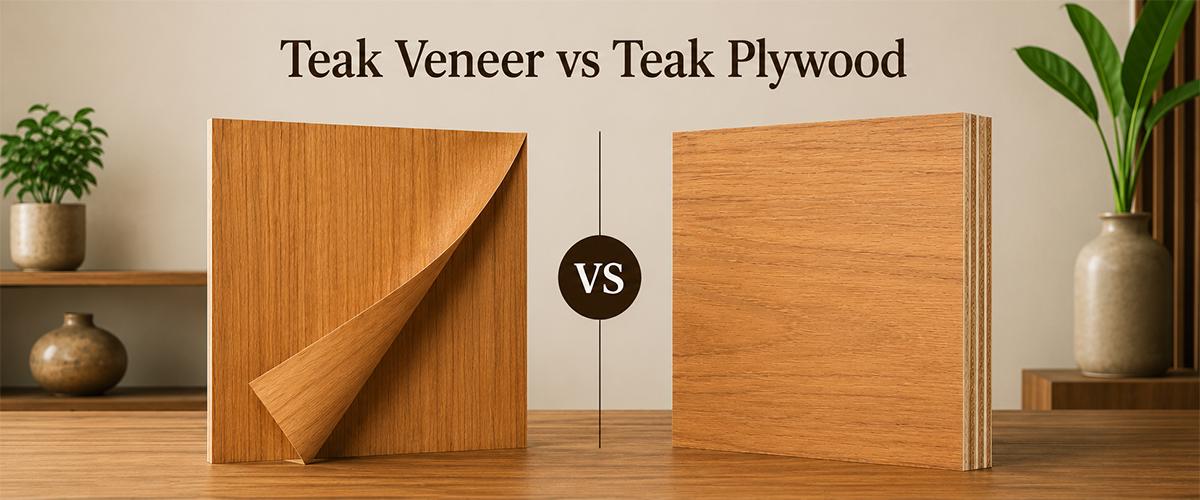
Before we compare teak veneer vs teak plywood, od it is important to know what teak veneer is. Teak veneer is a thin layer of natural teakwood cut from a log and glued to a base material like plywood, MDF or blockboard. Veneer gives you the elegant look of natural wood, but uses wood efficiently, because it only uses a thin layer of teak.
What is teak veneer is also what can be used as a decorative surface, not a structural material. Each sheet has a distinctive grain, texture and colour variation, making it a popular choice in premium interiors.
The focus is on aesthetics in applications such as wardrobes, decorative wall cladding, furniture shutters, doors, conference tables and reception areas, and it is here that interior designers often choose veneer. Knowing what teak veneer is helps you to understand the difference between teak veneer and teak plywood more clearly.
What is Teak Plywood?
Knowing what teak plywood is is necessary in order to have a better perspective on teak veneer vs teak plywood.
Teak plywood is a type of manufactured wood which is made of several layers of wood veneers glued together and compressed at high temperature and pressure. The direction of the grain of one layer is perpendicular to the adjacent layer, making it a very strong and stable structure that does not warp.
Plywood, unlike teak veneer, is used for constructive work. It is an important component of furniture production and is used as a base which is finished with laminates, paints or veneers according to one's desire.
Comparison: Teak Plywood vs Teak Veneer
| Feature | Teak Veneer | Teak Plywood |
|---|---|---|
| Purpose | Decorative surface | Structural furniture material |
| Construction | Thin natural teak wood layer | Multiple wood veneer layers bonded together |
| Strength | Depends on base material | High structural strength |
| Appearance | Natural teak grain and texture | Usually finished with veneer or laminate |
| Best Applications | Furniture shutters, wall panels, doors | Cabinets, wardrobes, shelves, furniture framework |
| Finish Options | Natural polish or PU finish | Veneer, laminate, paint or polish |
Teak Veneer vs Teak Plywood: Key Differences
Understanding the difference between teak veneer and teak plywood becomes easier by comparing the properties of both materials.
Construction
The main difference between teak veneer and teak plywood is how they are produced. The veneer is a thin slice or peel of teak whose purpose is decorative, while plywood is a construction product that is assembled from various parts glued together.
Purpose
Another important difference between teak veneer and teak plywood is their uses. Veneer makes the furniture look better, and plywood gives it the strength to withstand daily use.
Strength & Durability
If you are comparing teak veneer vs teak plywood, the plywood is much stronger due to the cross-laminated construction. Veneer cannot by itself take weight and needs a solid substrate beneath it.
Appearance
The look is one of the biggest advantages in teak veneer vs teak plywood. The veneer has real teak grains and wood patterns, so each piece of furniture is unique. Plywood, on the other hand, is usually hidden beneath decorative finishes.
Moisture Resistance
Another difference between teak veneer and teak plywood is its performance with moisture. Veneer resistance to moisture depends on the base material and surface finish. Quality plywood is available in moisture-resistant and boil-water-proof grades for use in different environments.
Applications
The difference between teak veneer and teak plywood can be seen in their application as well. Veneer is often used for decorative furniture, feature walls, doors and high-quality interiors. Modular kitchens, wardrobes, cabinets, shelves, partitions and furniture frameworks are made of plywood.
Maintenance
They require periodic polishing and handling with care to preserve the natural finish. Quality plywood is used mostly as a structural element in furniture and requires little maintenance.
Price Comparison: Teak Veneer vs Teak Plywood
Cost varies depending on the wood quality, thickness, grade, and brand.
-
Teak veneer is generally priced per sheet or square foot based on species and veneer cut.
-
Teak plywood is priced according to thickness, grade, and core construction.
-
Using veneer over plywood is often more economical than solid teak furniture while delivering a similar premium appearance.
Compare lifecycle value rather than upfront cost, especially for long-term furniture applications.
Thickness Options for Teak Plywood
Selecting the correct thickness improves furniture strength and durability.
| Thickness | Common Applications |
|---|---|
| 6 mm | Wall panelling, partitions, drawer bottoms |
| 9 mm | Cabinet backs, light furniture |
| 12 mm | Shelves, TV units, modular furniture |
| 16 mm | Wardrobes, kitchen cabinets, storage units |
| 19 mm | Heavy-duty furniture, tabletops, workstations |
Benefits of Teak Veneer
Teak veneer vs teak plywood. Teak veneer offers some advantages in terms of appearance:
- Unique grain pattern with real teak wood look.
- Gives a premium look to furniture and interior surfaces.
- Every veneer sheet has its own texture and finish.
- Ideal for luxury residential and commercial interiors.
- Rational utilisation of natural wood resources.
Benefits of Teak Plywood
Another practical advantage of plywood is the difference between teak veneer and teak plywood.
- High strength and durability.
- Stability in finite dimensions.
- Good holding power for screws and nails.
- Increased resistance to bending and warping.
- Appropriate for furniture that is used every day.
- For interior and moisture-prone applications, available in various grades.
Maintenance Care Tips for Teak Veneer
Proper care helps preserve the natural beauty of teak veneer for years.
- Clean regularly using a soft, dry or slightly damp microfiber cloth.
- Wipe spills immediately to prevent moisture from affecting the surface finish.
- Avoid abrasive cleaners, steel wool, or harsh chemicals.
- Protect the surface from prolonged direct sunlight to minimise colour fading.
- Use coasters, mats, and protective pads to prevent scratches and heat marks.
- Re-polish or refinish the surface periodically to restore its natural appearance.
Which One Should You Choose?
Choosing between teak veneer vs teak plywood is more about what you need from your project than which is better overall.
If your priority is achieving the rich appearance of natural teak wood, veneer is an excellent choice for visible furniture surfaces.
Plywood is the best material for furniture which needs long-term strength, stability and durability. In fact, the two materials are often mixed. Furniture is built around a core structure of high-quality plywood, and has a surface layer of teak veneer for a premium natural wood finish. Knowing the difference between teak veneer and teak plywood will help you select the right combination for your needs in terms of function, looks, and how long you want it to last.
Tips for Choosing the Right Material
A few factors that one must think of before choosing between veneer and plywood are:
-
Determine whether structural strength or appearance is more important.
-
Pick the correct plywood depending on how it is to be used, i.e moisture resistance or waterproofing for bathrooms and kitchens.
-
Consider the quality of veneer with respect to its grain pattern and finish.
-
Select appropriate thickness and grade for your furniture-making project. Procure plywood from known manufacturers who have established quality records.
Choosing Quality Plywood for Long-Term Performance
Veneer sets the appearance of furniture, but the quality of the plywood underneath the veneer makes a huge difference in the longevity and life of furniture. When choosing plywood, look for things like:
- Boosts strength and stability thanks to a hardwood core.
- Vacuum Pressure Treatment (VPT) for enhanced termite and borer resistance.
- Quality resins for strong bonding.
- Moisture-resistant or boiling water-proof grades as per application.
- Excellent screw and nail retention for sturdy furniture.
- Plywood manufactured to recognised standards of quality with low emissions.
Royale Touche Plywood has a range of plywood options with these performance-oriented features for residential and commercial interior applications.
Conclusion
The distinction between teak veneer vs teak plywood is crucial for making the best choice for one's furniture and home. Knowing the difference between teak veneer and teak plywood helps homeowners, architects and interior designers choose materials that combine beauty with practicality. There are certain merits of using veneer, which include adding beauty, while plywood has merits of strength and durability for day-to-day use.
FAQs
What is the difference between teak veneer and teak plywood?
The most important difference between teak veneer and teak plywood is that whereas teak veneer is a decorative product made from natural teak wood, teak plywood is made through an industrial process for use in furniture and home furnishing.
What is teak plywood?
Teak plywood is multi-layer wood that was created through the introduction of the compressor to make its production economically viable for use in both furniture and interiors.
What is teak veneer?
Teak veneer is made of teak wood that is thin in character,which is predominant in use for aesthetic purposes, as it is used for finishes in furniture and wall panels.
Can teak veneer and teak plywood be found together?
Yes. Teak plywood provides the core part of the furniture, while teak veneer is the superficial decorative covering.
Which is better, the two - teak veneer and teak plywood?
It all depends on what you require, re as teak veneer is much better for decoration, while teak plywood is strong.