PVC Board vs Plywood: Which Is Better for Your Home?
July 23, 2026
Table of Contents
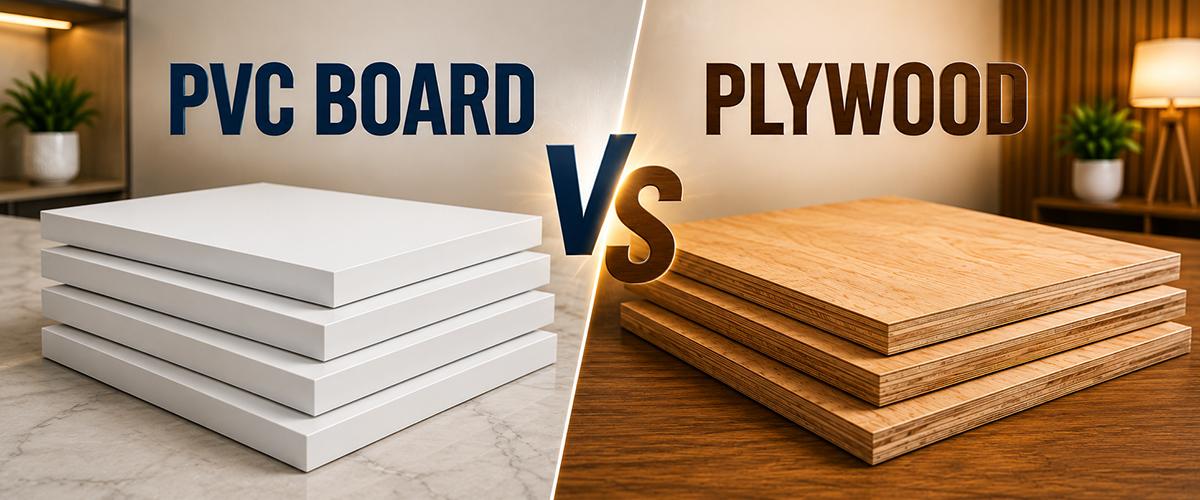
PVC boards are waterproof and resistant to termites and borers, which makes them ideal for areas with water, such as under-sink cabinets and bathrooms. Plywood is a better choice for wardrobes, modular kitchens, doors and furniture that need strength and long-term durability. Understanding PVC sheet vs plywood will help you to choose the right material for every space in your house.
Why Compare PVC Board and Plywood?
The material of furniture has an impact on durability, maintenance and long-term performance. Today, many homeowners are comparing PVC board vs plywood. Modular kitchens, wardrobes, bathroom cabinets, TV units and storage furniture are widely made using them. Both materials are readily available, but their performance varies with exposure to moisture, furniture load and installation conditions.
PVC is a synthetic, water-resistant material. Plywood is a structural engineered wood panel. Knowing the differences will help you to choose the right material for each space.
PVC Board vs Plywood: Understanding the Basics
PVC boards are manufactured from Polyvinyl chloride. They are lightweight, water-proof and resistant to termites and borers. They are often placed in wet locations where moisture is an issue. Plywood is made by heat and pressure glueing many layers of thin wood veneers together. It is a cross-laminated construction and has great strength, stability and durability. Hence, it is appropriate for heavily loaded furniture and also regular use.
When it comes to PVC board vs plywood comparison, one is made to resist moisture while the other is famous for its structural performance.
PVC Board vs Plywood: Key Differences
| Feature | PVC Board | Plywood |
|---|---|---|
| Water Resistance | Completely waterproof | Depends on the grade; BWP plywood is suitable for wet areas |
| Strength | Suitable for lightweight furniture | High strength for heavy-duty furniture |
| Termite Resistance | Resistant to termites and borers | Requires proper treatment for better protection |
| Screw Holding | Moderate | Excellent |
| Heat Resistance | May deform under prolonged heat | Better suited for kitchen furniture |
| Weight | Lightweight | Strong and comparatively heavier |
The biggest advantage of PVC board vs plywood is the ability of plywood to support heavy furniture. It has a better ability to bear a load and is less likely to sag over time.
Water Resistance
For bathrooms, utility rooms and under-sink cabinets, PVC is usually favoured because it won’t absorb water or swell.
Durability
Plywood is a better choice for wardrobes, bookshelves, kitchen cabinets and office furniture as it retains its shape even after years of use.
Hardware Performance
Furniture doors and drawers rely on strong screw holding. Plywood is better for holding hinges, drawer channels and handles.
Best Applications for PVC Board and Plywood
When it comes to PVC board vs plywood in furniture application, the choice is easy.
Modular Kitchen
Often a combination of both materials is best. PVC boards are good for sink cabinets and wet areas. Plywood is better for overhead cabinets, drawers and countertop units as it provides better structural support.
Wardrobe
When it comes to wardrobes, the comparison clearly leans towards the plywood. Tall wardrobes, loft storage and sliding doors require strong panels that won’t bend, and that hold fittings securely.
Bathrooms
One of the best uses for bathrooms is PVC boards. They don’t swell or come apart when exposed to humidity, steam or direct water.
Doors and Shelves
Plywood is still the preferred material for doors, bookshelves, study tables, TV units and office furniture because of its superior strength and stability.
Plywood vs PVC Board Price Comparison
The cost of PVC boards and plywood varies depending on thickness, grade, and brand.
- PVC boards generally have a higher upfront cost than standard plywood.
- Premium BWP plywood may cost as much as or more than high-quality PVC boards.
Consider long-term durability and application instead of price alone when choosing between the two.
Lifespan: How Long Do PVC Board and Plywood Last?
With proper installation and maintenance, both materials offer long service life.
-
Quality plywood can last 20–30 years or more in suitable conditions.
-
PVC boards generally last 15–25 years, especially in moisture-prone areas.
The lifespan depends on product quality, usage, and exposure to environmental conditions.
Weight-Bearing Capacity: Which Material Is Stronger?
Load-bearing capacity is one of the biggest differences between the two materials.
-
Plywood offers excellent screw holding and can support 50–100 kg or more, depending on thickness and furniture design.
-
PVC boards are better suited for lighter applications and typically support 20–40 kg, depending on board thickness and support.
For wardrobes, shelves, and heavy furniture, plywood remains the preferred choice.
Finish Options: PVC Board vs Plywood
Both materials offer different finishing possibilities depending on the furniture design.
-
PVC boards are available in ready-made colours and textured finishes with minimal finishing work.
-
Plywood supports veneers, laminates, paints, polishes, and decorative finishes for greater design flexibility.
-
Plywood provides more premium finish options for customised furniture.
Environmental Impact: PVC Board vs Plywood
Environmental impact depends on the material composition and manufacturing process.
-
Plywood is made from natural wood veneers and can be a more sustainable option when sourced responsibly.
-
PVC boards are manufactured from synthetic polymers and are less biodegradable than plywood.
-
Choosing certified, responsibly manufactured materials helps reduce environmental impact.
PVC Sheet vs Plywood: Which Offers Better Value?
Many homeowners also compare PVC sheet vs plywood for modular interior materials.
In wet spaces, PVC sheet vs plywood is generally good for PVC, as it doesn’t need a lot of maintenance and moisture won’t affect the product.
PVC sheet vs plywood is generally preferred for furniture that is expected to last for many years, because of plywood’s strength, durability and better hardware support.
Another thing to keep in mind with PVC sheet vs plywood is repairability. You can more easily alter, repair or refinish plywood furniture, but damaged PVC panels normally have to be replaced.
Overall, PVC sheet vs plywood should be evaluated based on where the material will be installed rather than picking one option for the whole house.
How to Choose the Right Material
There are a few things to think about before you decide on which material to choose:
- Will the furniture be water tested?
- Is it supposed to carry a lot of weight?
- Will doors and drawers be opened a lot?
- Is durability over a long time important?
- Is the material in a bathroom, kitchen or bedroom?
These questions will help you select the right material for each application.
Why Quality Plywood Matters
When comparing both materials, the quality of the plywood will make a huge difference to the performance of the furniture. Look for plywood that provides:
- Hardwood core provides strength.
- Strong bonding tech.
- Good screw and nail holding power.
- Moisture-proof or boiling water-proof grades.
- Proofing against termites and borers.
- Consistent production quality.
Royale Touche Plywood offers premium plywood solutions for furniture that requires strength, durability and performance in residential and commercial interiors.
Conclusion
The choice of PVC board vs plywood depends on the furniture application, not the material for every project. PVC boards are a great choice for bathrooms, utility rooms and under-sink cabinets as they are waterproof and moisture-resistant. Plywood is more suitable for wardrobes, modular kitchens, bookshelves, doors and other furniture that needs structural strength. Likewise, knowing about PVC sheet vs plywood helps homeowners make pragmatic choices in terms of durability, maintenance, and performance expectations. Choosing the right material for the right job means you'll have furniture that is functional and will last for years.
FAQs
Which Is Better: PVC Board vs Plywood?
PVC boards are good for wet areas, while plywood is good for heavy-dutyy furniture and structural work.
What Is the Difference Between PVC Sheet vs Plywood?
The main difference between PVC sheet vs plywood is that PVC sheets are man-made waterproof panels, while plywood is an engineered wood product that is known for its strength and durability.
Can PVC Boards Replace Plywood?
You can use PVC boards in place of plywood when there is a lot of moisture. However, plywood continues to be the best option for furniture that will carry a heavy load.
Which Material Is More Durable?
Both materials can offer a long service life in the right application. PVC is great for wet environments while plywood is better for furniture that gets daily use.
Can You Combine PVC Board and Plywood?
Yes. In many modular interiors, the areas prone to moisture are made up of PVC boards, and the main furniture structure is made of plywood. This way, they get the advantages of both materials.
Is PVC board eco-friendly compared to plywood?
Plywood is generally considered more eco-friendly when manufactured from responsibly sourced timber, while PVC boards are synthetic products.
What is the price difference between PVC board and plywood?
PVC boards usually cost more than standard plywood, although premium plywood grades may have similar pricing.
How long does a PVC board last compared to plywood?
PVC boards typically last 15–25 years, while quality plywood can last 20–30 years or more with proper care and maintenance.

Related Blogs