Hardwood vs Softwood Plywood: Key Differences, Uses & How to Choose
March 24, 2026
Table of Contents
Hardwood vs Softwood Plywood is one of the most frequently asked questions regarding plywood. Many furniture makers, builders, and interior designers often have difficulty understanding the differences between softwoods and hardwoods and which wood will suit their needs best. In order to choose the proper plywood for a project, it's necessary to differentiate between hardwood and softwood plywood, also based on their characteristics.
Plywood is an important contributor to furniture durability, structural integrity, and the ultimate performance of any piece of furniture, cabinetry, or construction. The ability to differentiate between softwood and hardwood becomes critical to selecting the appropriate plywood for a project in a residential or commercial environment.
This article will be a detailed guide to possible hardwood vs softwood plywood types, including their definition and characteristics, degree of durability, applications, and using this information to distinguish between the types of wood and to enable you to make the right decision when selecting plywood sheets for your furniture, cabinetry, or construction applications.
Quick Answer
The most significant way to tell the difference between softwood and hardwood plywood is by the tree species and fibre structure.
Hardwood comes from deciduous trees like oak, maple, walnut, and birch, which grow slowly and produce dense wood. Softwood comes from conifer trees like pine, spruce, and cedar, which grow faster and produce lighter wood.
Generally, hardwood plywood is stronger and more durable, while softwood plywood is lighter, economical, and widely used in construction.
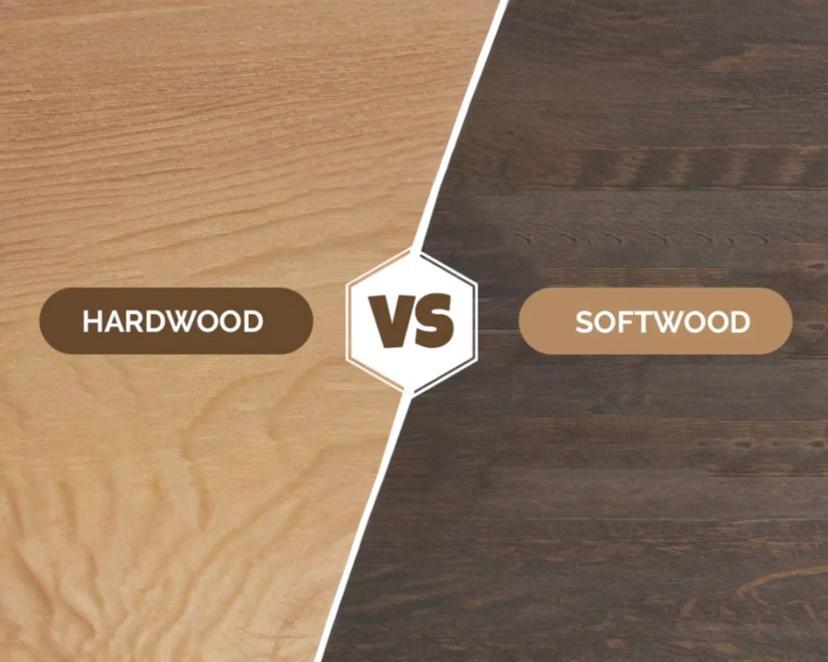
Hardwood vs Softwood Comparison
| Feature | Hardwood Plywood | Softwood Plywood |
|---|---|---|
| Tree Type | Deciduous trees such as oak, maple, walnut | Coniferous trees such as pine, spruce, cedar |
| Growth Rate | Slow-growing trees | Fast-growing trees |
| Density | Higher density | Lower density |
| Strength | Stronger and more durable | Moderately strong |
| Weight | Heavier | Lighter |
| Cost | More expensive | More economical |
| Appearance | Attractive grain patterns | Straight and simple grain |
| Uses | Furniture, cabinetry | Construction, roofing |
What is Hardwood
Hardwoods come from deciduous or broadleaf trees that grow slowly and have dense fibres.
Examples include:
- Oak
- Maple
- Walnut
- Teak
These are widely used in premium furniture, cabinetry, and decorative interiors.
Characteristics of Hardwood
- High density and strength
- Attractive grain patterns
- Resistant to wear and impact
- Suitable for structural and decorative applications
Also Read: Understanding Hardwood Plywood: Types, Uses & Versatility
What is Softwood
Softwoods come from coniferous trees that grow faster and have lighter density.
Examples include:
- Pine
- Cedar
- Spruce
- Fir
They are commonly used in construction due to affordability and flexibility.
Characteristics of Softwood
- Lightweight
- Faster growth rate
- Straight grain
- Cost-effective ##
Hardwood vs Softwood
The difference is based on botanical classification:
- Hardwoods = Angiosperms
- Softwoods = Gymnosperms
Hardwoods grow slower and are denser, while softwoods grow faster and are easier to work with.
Hardwood vs Softwood Plywood
- Hardwood plywood is made from hardwood veneers
- Softwood plywood is made from softwood veneers
Hardwood plywood offers better durability and lifespan, while softwood plywood is widely used for construction and structural purposes.
What is Softwood Plywood
Softwood plywood is made from thin sheets of softwood trees and is used in:
- Construction
- Structural work
- Packaging
It is lighter, cost-effective, and easy to handle.
Key Differences Between Softwood and Hardwood
Growth Rate
- Hardwood grows slowly and is denser.
- Softwood grows faster and is less dense.
Grain Pattern
- Hardwood has complex grain.
- Softwood has straight grain.
Density
- Hardwood is denser and stronger.
- Softwood is lighter.
Workability
Softwood is easier to work with compared to hardwood.
Hardwood vs Softwood Plywood - Strength and Durability
Hardwood Plywood
- More durable
- Load-bearing
- Impact-resistant
Used in:
- Furniture
- Interiors
Softwood Plywood
- Lightweight
- Cost-effective
- Suitable for structural work
Uses of Hardwood and Softwood Plywood
Hardwood Plywood Uses
- Furniture
- Cabinets
- Decorative panels
- Doors
- Premium interiors
Softwood Plywood Uses
- Roofing
- Wall sheathing
- Subflooring
- Construction
- Packaging
Also Read: Types of Hardwood & How to Utilize Them in Your Project
How to Choose Plywood
Things to consider when choosing plywood
- Application (furniture or construction)
- Strength requirements
- Moisture exposure
- Finish requirement
- Budget
Maintenance Tips
When choosing plywood for your project, you should consider the type of care and maintenance required after installation.
- Preventing damage to plywood surfaces by keeping them free from excess moisture
- Using the correct surface finish or laminate to protect plywood
- Minimising prolonged contact with water
- Cleaning plywood surfaces regularly to remove dust build-up
- Ensuring proper installation and structural support
Mistakes to Avoid
Common mistakes include:
- Choosing based only on price
- Ignoring moisture resistance
- Using decorative plywood structurally
- Wrong thickness selection
- Not understanding differences
Key Differences Summary
Hardwood plywood provides:
- High durability
- Strong structure
- Premium finish
Softwood plywood provides:
- Lightweight structure
- Cost-effectiveness
- Construction use
Frequently Asked Questions
1. What are the differences between hardwood and softwood?
There are many differences that exist between hardwood and softwood, which include the genera of trees, as well as the value of the respective woods.
2. What is the difference between hardwood and softwood plywood?
The way that the veneer (piece of wood) is made to finish the plywood face is what makes the plywood different and results in the strength/weight of the plywood as well of transfer of load into the plywood.
3. Are hardwood plywoods of better quality than softwood plywoods?
Hardwood plywood is often much stronger and more durable than softwood plywood; it will better support/withstand damage, wear and tear.
4. In what instance would they typically use softwood plywood?
Softwood plywood is often used for construction products, and would include roof products, floor base products, and structural products.
5. How do you visually distinguish between hardwood and softwood plywood?
To visually distinguish between hardwood and softwood plywood, you would review the genus of the tree, the wood grain patterns, the weight of the wood, and how they are typically used.
6. Is hardwood plywood commonly used for furniture?
Hardwood plywood is commonly used for furniture, due to the stronger characteristics of hardwood, and the wonderfully beautiful finish so commonly associated with hardwoods.
7. Is softwood plywood generally less expensive than hardwood plywood?
Softwood plywood is generally found to be less expensive than hardwood plywood due to the fact that softwood trees grow quicker and require less labour to obtain than hardwood trees.

Related Blogs