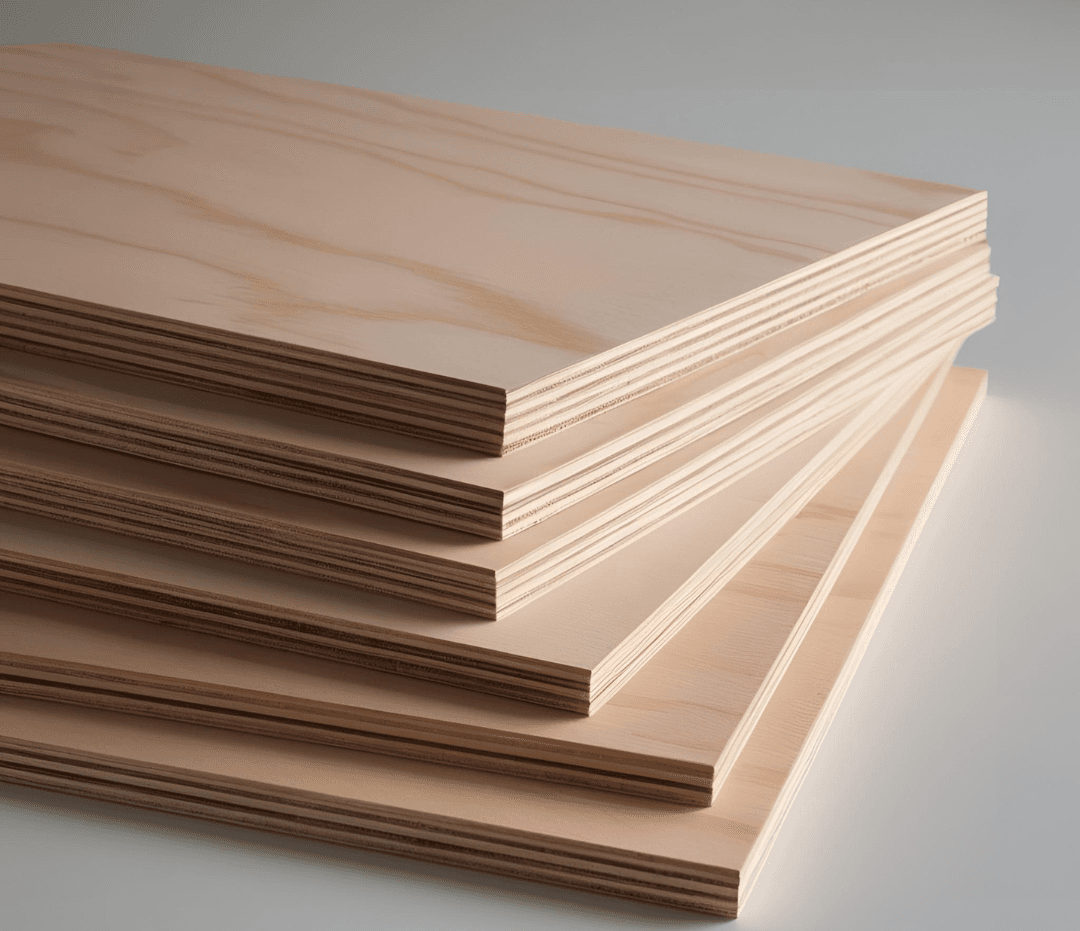
Calibrated Plywood vs Normal Plywood – Which Should You Buy in 2026

May 22, 2026
Table of Contents
When choosing materials for your home's interior, every material decision impacts more than just how your home looks; it will also determine the performance of the materials throughout time. If you have a modular kitchen that was purchased from a retailer and requires precision fitting into space, the quality of the plywood will play a very important role in the overall outcome.
If your modular kitchen is not built very well (very common), you can have uneven surfaces or poor laminate bonds, which can create increased maintenance costs down the road. When making an informed decision regarding the choice between calibrated plywood and normal plywood, you will avoid the above situations and make a thoughtful decision for the future.
Which One Should You Choose?
-
Calibrated plywood, if you are concerned about a precise finish on cabinets or any other type of modern modular interior.
-
Normal plywood is the most important factor to you, whether it is for a function that is basic in nature.
The short version of the difference between calibrated plywood and normal plywood is whether you value precise fabrication and finishing versus lower cost and general usage materials.
What is Calibrated Plywood?
Calibrated plywood refers to high-tech engineered plywood products that are manufactured with strict manufacturing tolerances using sophisticated machines that uniformly sand both sides of each sheet to create a uniform thickness and precision to be used with various finishes like paint, veneers, acrylic, and laminates.
Key Features of Calibrated Plywood
- Used in Modular Furniture
- Flat Surfaces
- Excellent Adhesion with Laminated Items
- Consistent Thickness
When comparing the difference between calibrated plywood and normal plywood, the differences in performance and precision will stand out the most.
What is Normal Plywood?
Regular plywood is produced in a traditional method with slight variations in thickness due to the consensus of manufacturers for their different types of production.
Key Features of Normal Plywood
- Minor Variance Between Thicknesses
- No Speciality Use - Basic Furniture Cost-Effective to Use
- Easily Found at Any Home Centre or Building Supply Centre
Due to this comparison of calibrated plywood vs normal plywood, the regular plywood is used for the lower cost and non-precision applications.
Key Difference Between Calibrated Plywood and Normal Plywood
| Characteristics | Calibrated Plywood | Regular Plywood |
|---|---|---|
| Thickness | Consistent | Inconsistent |
| Surface | Flat | Not Flat |
| Precision | High | Moderate |
| Application | Modular Furniture | General Furniture |
| Overall Cost | Expensive | Inexpensive |
This chart will summarise the major differences between calibrated plywood and normal plywood for future reference or quick reference.
Calibrated Plywood vs Normal Plywood: Detailed Comparison
1. Precision and Thickness Variations
The most significant feature when comparing calibrated plywood vs normal plywood is the high degree of precision.
Calibrated Plywood provides uniform thickness throughout and gives perfect alignment, similar to the normal plywood. Uniformly thick plywood, by being equal in thickness throughout, may therefore provide you with perfectly true and aligned sheets to use when constructing your project, as compared to the normal plywood, which can be prone to warping under different weighted applications. These qualities are considered important factors shaping the future of calibrated plywood in modern interior and furniture applications.
2. Surface Finish and Laminate Bonding
A calibrated plywood sheet provides a surface that is perfectly smooth. And a normal plywood surface is generally not as smooth as a calibrated plywood surface for different finishes. Thus, the difference between calibrated plywood and normal plywood in surface finish and laminate bond is significant. For any quality, high-end installation, there is a clear choice.
3. Strength and Durability
There is no significant difference in the overall strength or durability of a calibrated versus a normal plywood sheet if they are manufactured at the same thickness.
However, the difference between calibrated plywood and normal plywood in overall strength comes from consistency in thickness.
4. Ease of Installation
A calibrated plywood sheet is easy to cut, align, and install. When constructing a modular building using calibrated plywood, it will save an enormous amount of time during the installation process.
5. Cost Comparison
A calibrated plywood sheet typically has a higher upfront cost than a normal plywood sheet, while a normal plywood sheet has a lower cost per square foot.
These direct material costs are often the reason why many homeowners will be torn in their decision-making between a calibrated
Application-Based Usage
Where Calibrated Plywood is Best
- Modular Kitchens
- Wardrobes with sliding Doors
- Office Furniture
- Interior Projects requiring Precision
The key difference between calibrated plywood and normal plywood will directly affect both the quality of the final product and the durability of these products for each of the above applications.
Where Normal Plywood is Best
- Basic Furniture
- Temporary Setups
- Cost-Efficient Projects
- Non-Modular Carpentry Applications
These two plywood alternatives can be used interchangeably for these applications.
Why Calibrated Plywood is Trending in 2026
The growth of modern interior design has shifted toward more modular or factory-built furniture, resulting in greater demand for materials designed with precision in mind.
Reasons why calibrated plywood is trending up at present, compared to previous years, are:
-
Movement of kitchens toward a modular style; modular designs are more welcoming than traditional designs.
-
Increased demand for seamless appearances in furniture and cabinetry; look at IKEA, which has set the standard.
-
Shorter timeframes for people to have furniture constructed; modular furniture designs can be built faster than traditional designs.
-
Improved ability for durable laminates to adhere to calibrated plywood; as laminate technology improves, the chances of it adhering properly increase.
As you can see, the divergence between calibrated plywood and normal plywood has never been more pronounced than now.
Is Calibrated Plywood Worth the Price?
This is the most frequently asked question regarding the comparison of calibrated plywood vs normal plywood.
Choose Calibrated Plywood When
- Appearance is a top priority for the product you are creating
- Precision in measurement is essential
- You will be using modular interior designs
Choose Normal Plywood When
You have a specific budget Precision in your measurements is not a top priority Your furniture is basic in terms of construction
When deciding to use either calibrated plywood or standard plywood, the additional investment for calibrated plywood can be justified, as you can expect both the appearance and functionality of the finished product to be at a level of quality acceptable to you.
Long-Term Value Comparison
The difference between calibrated plywood and normal plywood is much more than just the price; it is also about long-term value.
Common Mistakes to Avoid
When homeowners choose between Calibrated Plywood and Regular Plywood, common mistakes they make include the following:
- Buying solely on price
- Not considering how much precision is needed for the project
- Not paying enough attention to how the finish will look after installation
These common mistakes can lead to aesthetic issues after they are installed and cost homeowners extra money in repairs of those mistakes.
Expert Recommendation
The correct way to select between Calibrated Plywood and Regular Plywood is to:
- Use Calibrated Plywood in all precise and visible locations
- Use Regular Plywood in less important, visible locations
This way, you could receive the best of both worlds: a cost-effective product and a high-performance product.
Final Verdict: Calibrated Plywood vs Normal Plywood
Calibrated plywood has the added benefit of providing exactly what is needed for current design trends. It also provides the extra benefits associated with precise and smooth finishes. One of the key benefits of calibrated plywood is its uniform thickness, which helps achieve better alignment and a seamless finish in furniture applications. Regular plywood has a lower price and is useful for basic-type projects.
No one material beats the other; it is determined by the needs of each project, and the selection of the chosen material will depend on those needs.
Conclusion
Your selection between Calibrated Plywood and Regular Plywood should be based on how you see your interiors functioning for an extended period of time. Regular plywood may allow you to save money initially; however, Calibrated plywood will provide better aesthetics, longer life, and therefore more customer satisfaction.
For customers who desire an aesthetically pleasing and long-lasting, precise interior, the use of high-quality manufactured materials from reputable plywood manufacturers, such as Royale Touche, will significantly affect the customer’s experience. Royale Touche provides manufactured-quality plywood options that satisfy current design parameters.
Frequently Asked Questions
What is the biggest difference between Calibrated Plywood and Regular Plywood?
The primary difference between calibrated plywood and normal plywood is the uniformity of thickness. Calibrated Plywood has a uniform thickness; therefore, Regular Plywood may have a variety of thicknesses depending upon the thickness of the material at each plywood panel.
Is Calibrated Plywood better than Regular Plywood?
Calibrated Plywood is considered to be superior to regular plywood in terms of precision, finish quality, and overall performance. Regular Plywood is satisfactory for low-cost projects.
Is Calibrated Plywood worth the price difference?
Yes. Calibrated Plywood has a greater long-term value than Regular Plywood with respect to precision and finish quality.
What are good projects for using Calibrated Plywood?
Calibrated Plywood should be used only with projects of a modular type (for example, kitchens, closets), high-end printing, or for furniture that is required to be used in showrooms.
May I use Regular Plywood to replace calibrated plywood?
No. The major and different physical properties of these two plywood types require different material applications.

Related Blogs