
What is a Waterproof Door? Features, Applications & Advantages
January 9, 2026
Table of Contents
When considering many types of exterior doors, the environment's moisture content can have a significant impact. In areas where humidity is high or there are significant periods of rainfall (monsoon seasons) or areas where there are frequent exposures of water, many homeowners suffer from a number of different challenges due to the accumulation of moisture. Common challenges related to this accumulation include warped door frames, misaligned or sticking doors, peeling laminate, termite damage, and even musty odours coming from the door or its surrounding area. As a result these problems can potentially create an additional expense when the homeowner either repairs or replaces the door.
To counteract these moisture-related challenges, waterproof doors are constructed using engineered materials developed to prevent moisture damage from occurring as opposed to merely trying to repair any moisture-related damage that may have occurred. Construction techniques applied to create water-resistant doors allow for the materials used to be completely sealed against moisture entry. If there is any moisture in the future, it will be unable to enter through the sealed joints or edges.
What Is a Waterproof Door?
Water-resistant doors are an alternative to traditional wooden and metal doors in order to prevent moisture from penetrating through the surface of the door to the inside of a building. Water-resistant doors do not absorb any moisture and will not expand or deform when exposed to rain, steam, or high humidity levels. Water-resistant doors will retain the original shape, size, and strength throughout the varying seasonal changes. Waterproof doors differ from regular wooden doors because they have been designed to be water-resistant using proprietary manufacturing and engineering methods.
What You Should Know About Waterproofing
In the case of a residential space
all doors are protected from warping or swelling during monsoon season and will continue to operate smoothly.
A commercial space
where hygiene, long-lasting durability, and low-maintenance requirements are of utmost importance.
Waterproof doors can withstand direct water contact from showers, steam, condensation from showering, and poor ventilation without sustaining damage.
Materials Used in Waterproof Door Manufacturing
Wood-plastic composites (WPC)
Wood-plastic composites (WPC) are a combination of plastic and wood fibres that are extremely durable and can withstand moisture without damage.
PVC (Polyvinyl Chloride)
PVC is manufactured through a fully synthetic process and is lightweight and non-porous. However, it is advisable to check local building codes before utilising this material for wet areas.
uPVC (Unplasticised Polyvinyl Chloride)
uPVC is a modified type of PVC that is stronger and more rigid, making it a good option for severe weather applications.
FRP (Fibre Reinforced Plastic)
FRP is a highly durable, impact-resistant material that will not be damaged by moisture or chemicals.
Marine plywood
Marine plywood is made with waterproof adhesives as part of the manufacturing process. This material is best suited for semi-wet application areas.
Manufacturing Process for Waterproof Doors
Waterproof doors are made using modern manufacturing methods rather than using traditional carpentry techniques.
-
When using high-pressure bonding, the integrity of the internal core layers of the door is preserved over the life of the product.
-
To provide uniform thickness, flatness, and edge alignment, precision calibration during the production of the waterproof door is essential.
-
While the core material of a door does not change, the addition of moisture-resistant adhesives contributes to the waterproofing process during production.
All types of waterproof doors have a core constructed of one of the following types of materials: WPC, PVC, or FRP; or marine-grade plywood. What is noteworthy about them is they all have the very same benefit – low water absorption. With respect to waterproof doors, they all maintain their integrity when they have prolonged exposure to moisture.
Outer Surface, Finishes & Coatings
-
The outer surface, laminate, or finish provides the initial line of protection against both water and steam. Laminates will help reduce scratching and increase the aesthetic appeal of the waterproof door.
-
In addition, the finishes used on the waterproof doors will prevent chipping and peeling of the finishes for many years.
-
Water-resistance coatings protect against water penetration by sealing off the pores and micro-gaps of the surface of the waterproof door.
-
In regard to edges, the coating protects against moisture penetrating through the most susceptible point of the waterproof door.
-
In addition to reducing the absorption of moisture, the waterproof door has anti-fungal coatings to maintain a hygienic environment in wet areas.
Why Some Doors Swell and Others Do Not
The differences in swelling between some and no swelling in the development of moisture can be attributed to the fact that natural fibres (like wood) absorb moisture, causing them to expand.
Because waterproof doors are made of synthetic materials or treated materials, they are made in a manner that completely prevents moisture from being absorbed, therefore eliminating swelling.
Features & Advantages of Waterproof Doors
Key Features
100% waterproof
designed to withstand continuous exposure to water with no loss of integrity.
Termite & borer proof
synthetic or treated materials prevent damage from pests.
Swelling-free
remains aligned for operation during all seasons and smooth operation will not change.
Ability to tolerate high moisture levels
performs well in damp, poorly ventilated environments.
Easy to maintain
no need for polishing, repainting, or chemical treatments.
Long life
intended to provide for years of use without failure of structural integrity.
Eco-friendly options
allows for less reliance on solid wood and fewer harsh chemicals.
Practical Benefits
-
No need to frequently repair or replace
-
Higher hygiene level
-
Maintain greater appearance, consistency, and usability
-
Suitable for residential and commercial applications
These collectively define the advantages of waterproof doors.
Waterproof Door Applications
Residential Applications
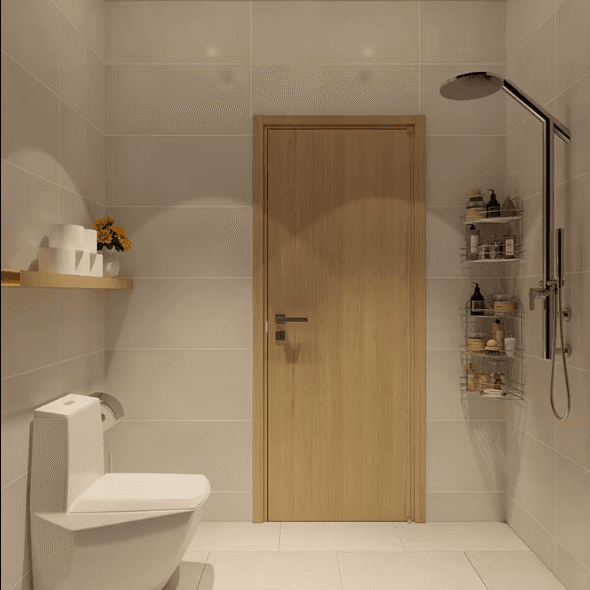
Bathroom doors
essentially waterproof, as bathroom doors will be under constant or near-constant direct exposure to both moisture and humidity.
Toilet doors
especially beneficial in small spaces with limited airflow.
Kitchen doors
water resistant to steam, grease, and heat-based cooking.
Balcony doors
can be used to shield from outdoor water exposure and rain.
Terrace doors
good for semi-open spaces.
Front entry doors
great for homes in humid areas or coastal zones.
These are common waterproof door applications in homes.
Commercial and Specialised Applications
Homes located in coastal regions
minimise damage from salt air due to constant exposure.
Hotels and resorts
designed to maintain cleanliness and aesthetics even with heavy usage.
Hospitals and clinics
decrease the rate at which moisture promotes bacterial growth.
Commercial buildings
provides lower maintenance costs and longer replacement cycles.
These are key waterproof door applications in commercial spaces.
Choosing the Right Waterproof Door
Your checklist for making a decision includes:
Selecting the appropriate material
considering how much exposure to moisture will be experienced.
Price
consider the total life cycle cost, not just the initial purchase price.
Laminate type
pick quality laminate with moisture-resistant coating.
Thickness
thicker doors provide better insulation and strength.
Frame compatibility
ensure water cannot seep through the frame.
Brand reputation
established manufacturers like Royale Touche Plywood ensure consistent quality.
Warranty
reflects confidence in durability.
Waterproof Door vs Normal Door
| Feature / Type | Waterproof Door | Wooden Door | Laminated Flush Door | Plywood Door | ABS Door |
|---|---|---|---|---|---|
| Moisture Resistance | Excellent | Poor | Moderate (surface) | Low (Marine better) | Limited |
| Swelling / Warping | No swelling | High | Possible over time | Likely | Possible |
| Termite Resistance | High | Low | Moderate | Moderate | Moderate |
| Maintenance Required | Very low | High | Medium | Medium | Medium |
| Lifespan | Long | Short–Medium | Medium | Medium | Medium |
| Initial Cost | Higher | Medium–High | Medium | Medium | Medium |
| Long-Term Value | Excellent | Low | Moderate | Moderate | Moderate |
When comparing door styles, wooden doors are susceptible to swelling from moisture and attacks by termites and need continual care. Laminated wood Flush Door styles are moisture resistant only at the surface; over time, moisture infiltrates to the core of these doors. Regular plywood doors absorb moisture and are, therefore, not advised in high humidity (or wet) environments. Marine-grade plywood is better in semi-wet areas. ABS (acrylonitrile butadiene styrene) doors provide limited water resistance and offer less rigidity for heavy-duty use than other door materials.
Although the initial cost of a waterproof door may be greater than that of other door options, waterproof doors outperform standard doors with respect to lifespan and maintenance needs, making them more economical over their entire lifecycle.
Waterproof Door Price Guide
The price of a waterproof door reflects both its material and construction quality. Some waterproof doors are more affordable based on the materials used, but others offer mid-and premium-priced selections, depending on the waterproof performance of the products and their longevity as well as the different styles of finish available.
By Material
WPC
moderate to premium pricing based on density and finish.
PVC
cost-effective for bathrooms and toilets.
uPVC
moderately priced with high weather resistance.
FRP
pricing depends on fibre grade and reinforcement.
Marine plywood
varies by thickness and laminate selection.
Price Influencing Factors
-
Thickness and size of door
-
Laminate or surface finish
-
Frame material
-
Hardware and installation quality
Maintenance Strategies for Waterproof Doors
Best Practices
-
Use mild detergent for cleaning
-
Avoid abrasive cleaners
-
Repair small scratches promptly
-
Ensure proper ventilation
-
Wipe edges and joints regularly
-
Maintain laminate surfaces
Conclusion
Waterproof doors are a long-term investment that provides homeowners and businesses with a durable, hygienic solution to eliminate water-related issues. By selecting the correct material, quality of construction, and application, homeowners and businesses can achieve the highest level of durability, hygiene, and cost savings. Please feel free to explore additional information regarding flush doors, WPC doors vs. plywood doors, and reputable door manufacturers to assist in making your final selection.
Frequently Asked Questions
Which waterproof door would be best for bathrooms?
WPC, PVC and FRP doors offer the best moisture-resistant options.
Are PVC doors fully waterproof?
Yes, PVC doors are 100% waterproof and non-absorbent.
Which is better: WPC or marine plywood?
WPC is best for fully wet areas; marine plywood suits semi-wet areas.
Do engineered doors swell in water?
No, WPC, PVC and uPVC doors do not swell.
What is the cost of a waterproof door?
Cost depends on thickness, size, material, and finish.
Is laminate waterproof?
Laminate protects the surface; the core provides water resistance.