Blockboard vs HDHMR: Which is Better for Furniture
October 9, 2026
Table of Contents
Choose HDHMR for kitchens, bathrooms and modular furniture, where its dense, moisture-resistant board and smooth finish perform better. Choose blockboard for dry rooms such as bedrooms and study areas, where its lighter weight, natural wood core and lower cost suit wardrobes, doors and shelves. HDHMR is moisture resistant, not waterproof.
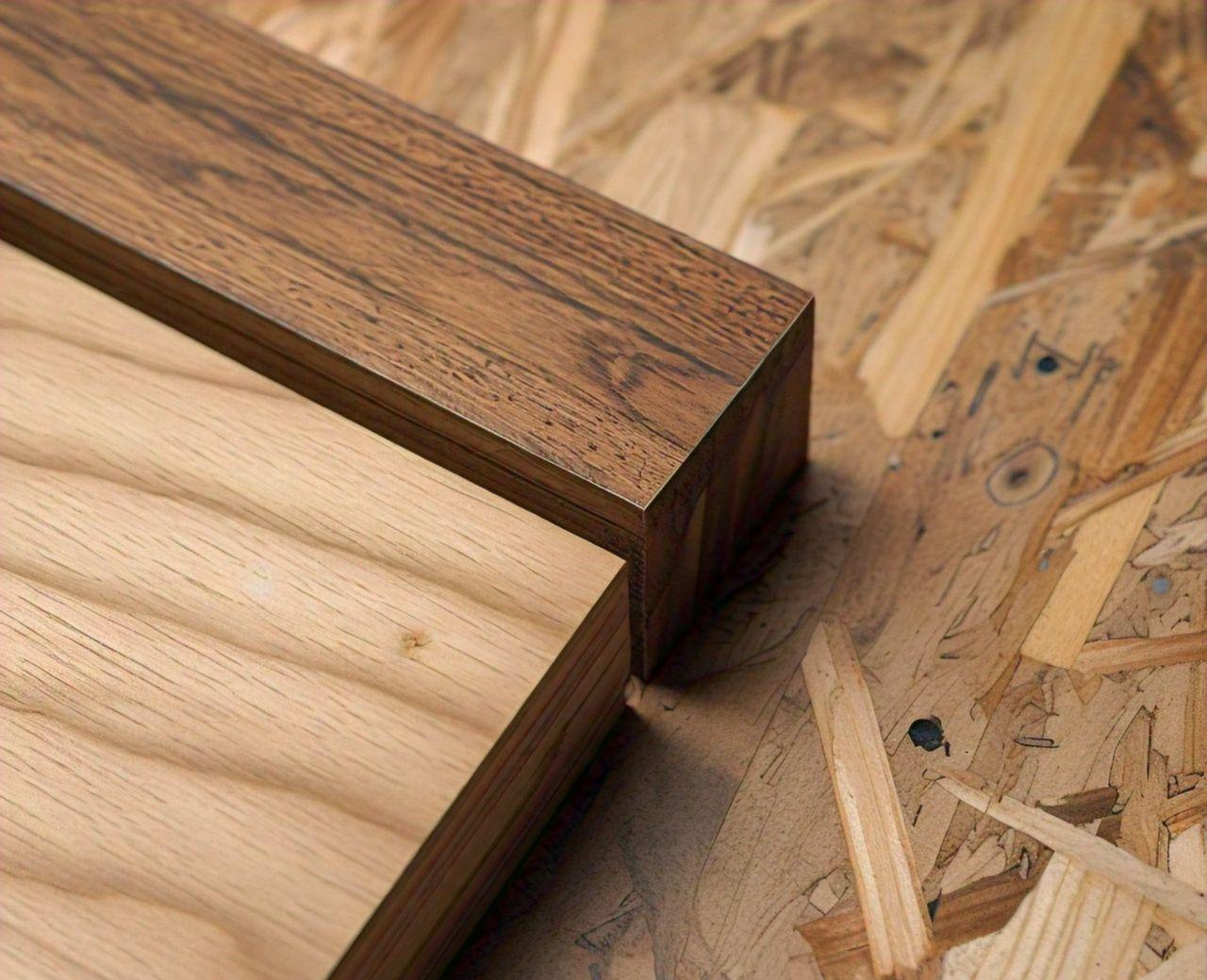
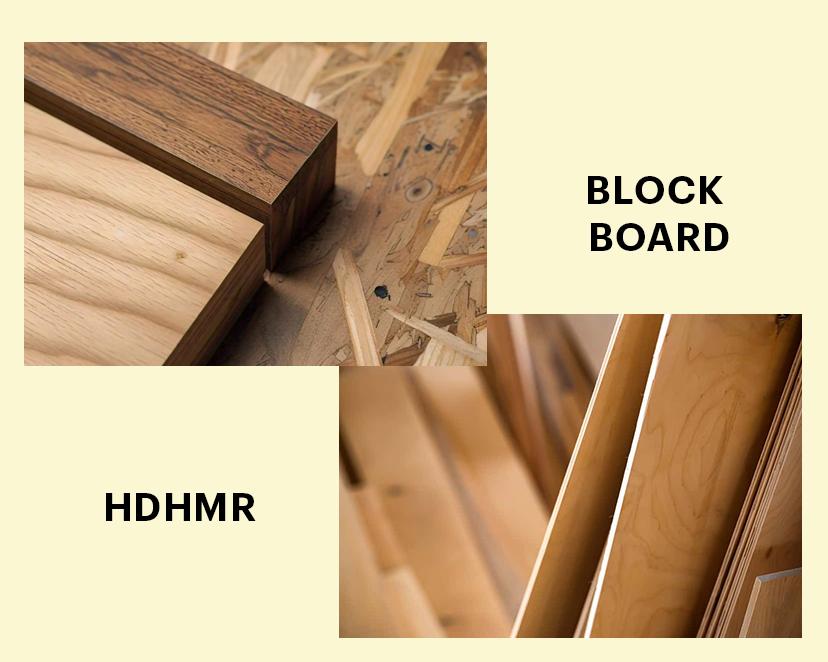
Blockboard has a core of wooden strips set between two hardwood veneers. HDHMR (High Density High Moisture Resistant board) is a fibre board made from wood fibres and resin pressed under heat and pressure.
| Feature | Blockboard | HDHMR |
|---|---|---|
| Core | Wooden strips between veneers | Dense, uniform wood-fibre board |
| Weight | Lighter | Heavier |
| Moisture | Absorbs moisture and may swell in humid areas | Moisture resistant, not waterproof |
| Finish | May need sanding before lamination | Very smooth, ready for laminate or paint |
| Working | Easy to cut and screw by hand | Best cut with machines or CNC |
| Cost | Generally lower | Generally slightly higher |
| Best for | Wardrobes, doors, shelves and partitions in dry rooms | Modular kitchens, bathroom storage, office furniture |
We will understand each product in detail – including what they are made of, which uses are most appropriate for each and ultimately, what performs, lasts and gives the best value.
What is a Blockboard?
Blockboard is a type of engineered wood composite made of wooden strips (pine or poplar) stacked and placed between two outer layers of hardwood veneer. The hardwood layers are then glued to the wooden strips with a high-quality resin under controlled heat and pressure. The result is a board that is light in weight yet very strong and resistant to bending. These characteristics are among the key Blockboard properties that make it suitable for a range of furniture and interior applications.
It is especially well-suited for large furniture pieces where straightness and durability are essential, such as long wardrobe shutters, doors, and bookshelves. Because of its stable core, blockboard for wardrobes has become a popular choice for both modular and custom storage solutions, offering good screw-holding capacity and ease of workmanship for traditional joinery and handcrafted furniture.
Blockboard offers these benefits:
Lightweight & Strong
Great for tall furniture and long panels.
Warp Resistant
Stays in shape after long use.
Good Workability
Easy to cut, screw, & nail.
Economical
Affordable compared to most high-density boards.
Natural Feel
Made with real wood strips for strength and a wood look and feel.
But the downside with blockboard vs HDHMR is that it can absorb moisture — and if you live in a very humid climate or use it in an area like a kitchen, it can swell or weaken over time, unless protected with proper finishing.
What is HDHMR?
HDHMR stands for High-Density High Moisture Resistant Board and is a next-generation engineered wood product designed to eliminate the weaknesses of traditional materials like MDF, particle board, and even blockboard under certain circumstances.
It is made from fine wood fibers and forest chips bonded with special moisture-resistant resin, under high pressure and temperature resulting in solid density, uniform mass and compact board with no air gaps.
Benefits of HDHMR:
High Moisture Resistant
Suitable for kitchens, bathrooms and utility areas.
Higher Density
Strength & durability are higher than traditional boards.
Termite & Borer Proof
Chemically treated for long life.
Smooth Finish
Ideal for laminates, paint and veneers.
Crack & Warp Proof
Does not lose original shape when pressure is applied.
In the debate of blockboard vs HDHMR, HDHMR reigns supreme in spaces where water or moisture is inevitable making it the best choice for modern modular furniture.
Major Differences Between Blockboard and HDHMR
Composition Differences: Inside the Core
What is inside these materials is critical to determining where to use them.
Blockboard Core
-
Wood strips laid edge to edge between sheets of veneer.
-
Lightweight with a natural wood grain appearance.
-
May exhibit small air gaps if not properly manufactured.
HDHMR Core
-
Made from compressed wood and resins.
-
Completely homogeneous structure that is dense and has no voids.
-
Will not let in moisture and will not warp.
The difference in structure explains why blockboards feel lighter and easier to work with, while HDHMR provides more durability and dimensional stability — important for furniture subjected to heavy use.
Strength and Longevity
When considering blockboard vs HDHMR, the strength and longevity are chief considerations for homeowners.
Blockboard gives you excellent strength in the direction of the wood strips, making it ideal for vertical furniture like doors and cupboards. However, prolonged increased moisture may weaken the internal structure if not sealed properly.
HDHMR provides strength across the entire surface area due to its dense structural properties and does not shrink, expand or delaminate which is an important reason for its increased preference in modern kitchens and bathrooms.
To summarize, if you want lightweight strength, a blockboard will do just fine. If you have a high-traffic area or need material for moisture-prone areas, then for durability’s sake, HDHMR would be the better choice in the blockboard vs HDHMR comparison.
Workability and Finish
How easy (or difficult) the material is to cut, shape, and finish will heavily influence the final appearance and usability of the furniture.
Blockboard
-
Saws and drills easily, with simple nailing or screwing for joining purposes.
-
Can be used for DIY manufacturing and simple construction on-site.
-
May need an extra sanding step before applying lamination due to a slightly uneven surface.
HDHMR
-
Much denser, and thus must be cut (with CNC routers, etc.) as opposed to being sawn.
-
Provides an extremely smooth surface ideal for lamination or high-gloss finish.
-
Cutting produces crisp edges that help avoid chipping during processing.
When it comes to finishing quality, HDHMR surpasses blockboards by providing a more premium/luxury polished look, one of the main reasons it’s getting popular in modular furniture. However, for traditional handmade furniture, blockboards offer better workability.
Moisture and Termite Resistance
Humidity is one of the most significant enemies of furniture, especially in coastal environments or Indian kitchens.
When comparing the benefits in the battle of blockboard vs HDHMR, HDHMR always wins. The board is designed to resist water absorption and is treated for termite and borer resistance. Blockboards are treated as well, but they do not achieve the same level of moisture resistance. Over time, the blockboard will begin to minorly swell after being subjected to moist air.
If using the board in a kitchen, bathroom or utility area, HDHMR is always the more sensible and long-lasting option. For living rooms, bedrooms or study areas, blockboard would suffice without question.
Cost Comparison
Price is either the largest or second-largest concern for most furnishing projects. Blockboard is a budget-friendly solution appropriate for large projects such as wall partitions, beds, and study tables. It produces solid performance at a fair price point and is worth using under urban budget considerations.
HDHMR may be slightly more expensive but has unmatchable durability, as well as improved water resistance and finish quality making it a better economic choice for areas with moisture exposure. When comparing blockboard vs HDHMR, the consideration should not only be the upfront cost but long-term value. Investing in the right material reduces the need for repairs or replacements, saving you money over time.
Blockboard vs HDHMR - Best Uses
Blockboard is best for
-
Bedroom wardrobes and cabinetry
-
Doors, shutters, and partitions
-
Study tables, shelving, and wall panels
-
Furniture located in dry, indoor spaces
HDHMR is best for
-
Modular kitchen cabinetry and countertops
-
Bathroom storage and vanity units
-
Office furniture for daily use
-
Utility and laundry storage spaces
Both materials serve distinct purposes; the key is understanding your environment and choosing wisely in the blockboard vs HDHMR decision.
Environmental & Safety Standards
All Royale Touche blockboard and HDHMR products meet or exceed environmental safety performance standards. Both are certified E-0 emissions boards, ensuring low formaldehyde emissions and better indoor air quality.
HDHMR uses reconstituted wood fibers and resins, putting waste wood back into use while offering high strength. Blockboard provides a natural wood texture and responsible timber sourcing. With Royale Touche Plywood, you can design sustainably while achieving performance and aesthetic value in every application.
Conclusion
So, which is better - blockboard vs HDHMR? If your furniture area does not occupy a kitchen, bathroom, or other humid areas, then blockboard is your ideal lightweight, strong, and economical option. If you are designing for kitchens, bathrooms, or moisture-heavy spaces, HDHMR is the better investment for density, durability, and water resistance.
In short, the question isn’t just about which is “better”, it's about what works best for your space, budget, and lifestyle.
With Royale Touche’s premium plywood and engineered board options, you get performance, aesthetics, and long-term reliability that every home deserves.
Frequently Asked Questions
Which one is stronger, blockboard or HDHMR?
Density is typically higher and more uniform in HDHMR, giving it better overall strength compared to blockboard, which depends on its wooden core and linear grain direction.
Can I use a blockboard in a kitchen?
Blockboard works but is not recommended near sinks or areas with water exposure. HDHMR is better suited for such spaces.
Is HDHMR waterproof?
HDHMR is highly moisture-resistant but not 100% waterproof. It can withstand humidity and mild pressure without swelling or delaminating.
Which one is easier to work with?
Blockboard is easier to work with for carpenters, while HDHMR is designed for machine cutting. Both provide great performance and excellent finishes.
What is the price difference between blockboard and HDHMR?
Blockboard is the more economical option and widely available. HDHMR is slightly higher in cost but offers superior durability and long-term value. Both are economically viable depending on the intended use.

Related Blogs