
Block Board vs Flush Door: What is the Difference between Blockboard and Flush Door?
December 31, 2025
Table of Contents
In construction as well as interior design, both flush doors and blockboards combine function and beauty. Each type of material presents different opportunities to create designs that work for specific requirements. While Blockboard and Flush Doors share some similarities in terms of components, they also have many major differences. It is important for both homeowners and contractors to have a clear understanding of both types before deciding which one is best suited for their needs. Below we provide a complete overview of both products and definitions to help understand the distinctions between the two.
Construction, Structure and Components
The type of material used to produce a flush door or blockboard will determine how it performs in a specific application.
Blockboard
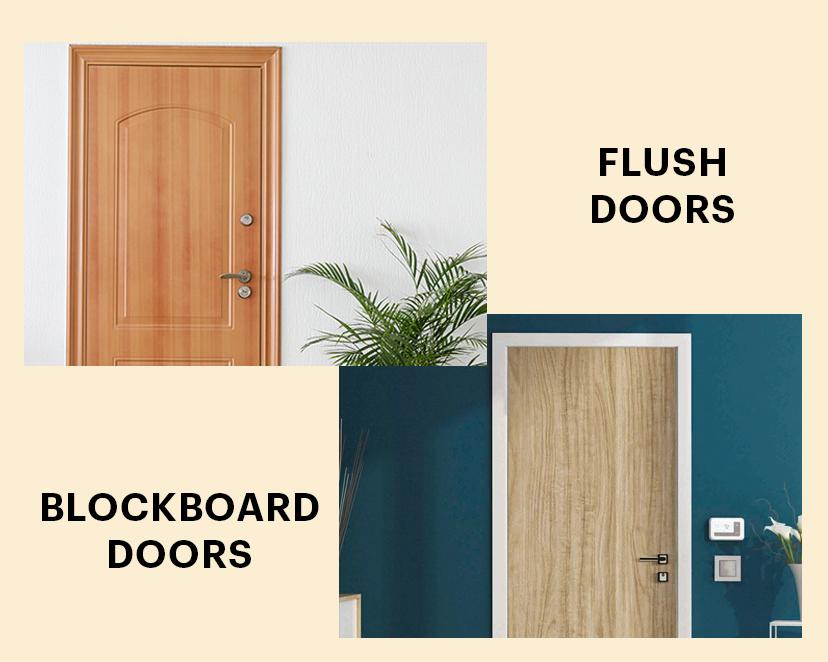
Blockboard is a product made by laying rectangular strips of softwood side by side and compressing them with laminates into thin sheets of veneer. Blockboard is lightweight, easy to cut, and flexible, which allows for ease of handling during carpentry because the spaces between the strips create less density and more flexibility.
Flush Doors
Flush doors are constructed in a completely different way. A flush door contains either a solid or semi-solid core material, typically honeycomb or tubular, with plywood or laminate sheets attached to the exterior. The uniform surface of a flush door gives it a smooth appearance, and flush doors are stronger than blockboard because of their higher mass and structural rigidity.
How Blockboard or Flush Doors Are Used
The way in which you plan to use Blockboard or Flush Doors is one of the main differences between the two products.
Blockboard
Blockboard is often used to make furniture, wall panelling, interior partitions, and many other applications. Because of its lightweight and flexible design, blockboard is used to build wardrobes, bookcases, storage cabinets, desks, wall panels, and room-dividing walls. Carpenters consider blockboards a good choice for projects that require longer sections of material than can be achieved using conventional materials such as plywood and particleboard.
Flush Doors
Flush doors are actual entrance doors and are found in both residential and commercial settings. They are used in bedrooms, bathrooms, kitchens, offices, and hallways. Because flush doors are specifically designed for opening and closing, providing privacy, and allowing double locking, they are not raw boards but fully finished products.
Durability and Strength
Durability is one of the most important criteria when comparing blockboard and flush doors.
Blockboard
Blockboard is suitable for indoor use with moderate to light loads. The chances of blockboard warping are very low, and it will provide adequate support for items placed on shelves or in cabinets. However, moisture can cause a lot of damage to the surface of untreated blockboard because it is not designed or manufactured for use in moist areas such as bathrooms.
Flush Doors
Flush doors were designed and engineered to allow for heavy use without bending, cracking, or sagging due to the constant weight of the door. Many different types and brands of flush doors are now made using waterproof or BWP (Boiling Water Proof) materials, making them ideal for bathrooms and kitchens. Flush doors are also extremely resistant to moisture, termites, humidity, and impact.
Finishing of Product
Appearance is often a deciding factor when purchasing a product.
Blockboard
Blockboards typically require a finish once they are manufactured, such as laminate, veneer, or paint. The appearance of the finished blockboard reflects the craftsmanship and material quality. Custom-made furniture or wall panelling often includes blockboard.
Flush Doors
A flush door has a smooth face and flat surface. Flush doors can be supplied as factory-finished or can be painted and polished later. They offer a simple, sleek, modern design that fits well in almost every contemporary home. Flush doors are significantly more luxurious in appearance than blockboard.
Stability and Functionality
The key differences between these two materials in terms of stability and functionality make it clear that they are not interchangeable.
Blockboard
Block boards are versatile furniture materials that provide long-lasting, lightweight, stable, and easy-to-install usage. However, their application is limited to furniture.
Flush Doors
Flush doors are specifically manufactured to withstand frequent use and have strong hardware, such as hinges, locks, and latches, which remain operational even after many years. Flush doors do not rattle or sag. If builders or installation crews require the best performance from a door, flush doors are the most suitable option.
Cost Versus Value
When comparing block boards with flush doors regarding cost versus value, it is important to remember that they belong to different pricing categories.
Blockboard
Block boards are one of the least expensive raw materials available and are ideal for large-scale furniture projects because of their relatively low weight, flexible design options, and minimal material waste when cutting and shaping.
Flush Doors
Flush doors are a more expensive choice because they come fully finished and include components such as structural cores, surface finishes, and sometimes waterproofing. Since flush doors typically provide many more years of service, offer greater safety and durability, and provide an aesthetic finish, they have a much higher value compared to block boards. If you are distinguishing between block boards and flush doors, you should compare their costs based on their intended uses instead of judging them solely by material.
Comparison Table: Blockboard vs Flush Door
| Feature | Blockboard | Flush Door |
|---|---|---|
| Primary Use | Furniture, shelving, panels, partitions | Door openings in homes and commercial spaces |
| Construction | Softwood strips compressed between laminates | Solid or semi-solid core with plywood or laminate surface |
| Weight | Lightweight | Heavier and more solid |
| Moisture Resistance | Not suitable for wet areas unless treated | Available in waterproof/BWP options |
| Durability | Suitable for moderate to light loads | Engineered for frequent use and long lifespan |
| Finishing | Requires laminate, veneer, or paint | Can be factory-finished or polished later |
| Cost | Economical raw material | Higher cost due to complete finished product |
| Applications | Wardrobes, cabinets, shelves, wall panels | Bedrooms, bathrooms, kitchens, offices |
| Hardware Support | Limited structural strength | Supports hinges, locks, latches without sagging |
Conclusion
Regarding block board vs flush door, there is no single answer. Both products provide value as building materials; however, they cannot be used interchangeably. To begin the comparison of block board vs flush door, the first step is to determine what each product is used for.
Blockboard is primarily used as a building material for constructing furniture, shelving, and partitioning. Flush doors are engineered products designed for door openings in residential and commercial structures. Using both flush doors and blockboard in the most appropriate places will maximise usage, ensure longevity, function properly, and provide good value for homeowners and builders.
Frequently Asked Questions
Can a Block Board be Used as a Door?
A blockboard cannot be used as a door, as its strength and overall stability are not comparable to that of a flush door. Based on the comparison of the two products, flush doors are superior to block boards when used as a means of opening and closing. Flush doors are the better option for load resistance.
Which Product Has Greater Durability for Everyday Use?
Both blockboards and flush doors are durable, but a flush door has naturally greater strength than a blockboard. This gives flush doors greater durability when opening and closing and provides added strength when weight is placed on the door.
Is Block Board Waterproof?
A standard blockboard is not waterproof and can suffer damage from moisture if not treated. Flush doors are available in waterproof options.
Where Would You Use Flush Doors?
Flush doors can be installed in bedrooms, bathrooms, office buildings, kitchens, or hallways. They are built for durability and privacy.
What Offers The Most Value?
Blockboard is a valuable building product for making furniture, while flush doors are a valuable building product for making doors. By understanding the differences between blockboard and flush doors, you will be able to make a better choice for your home.